
by Boehringer Ingelheim/April 3, 2026
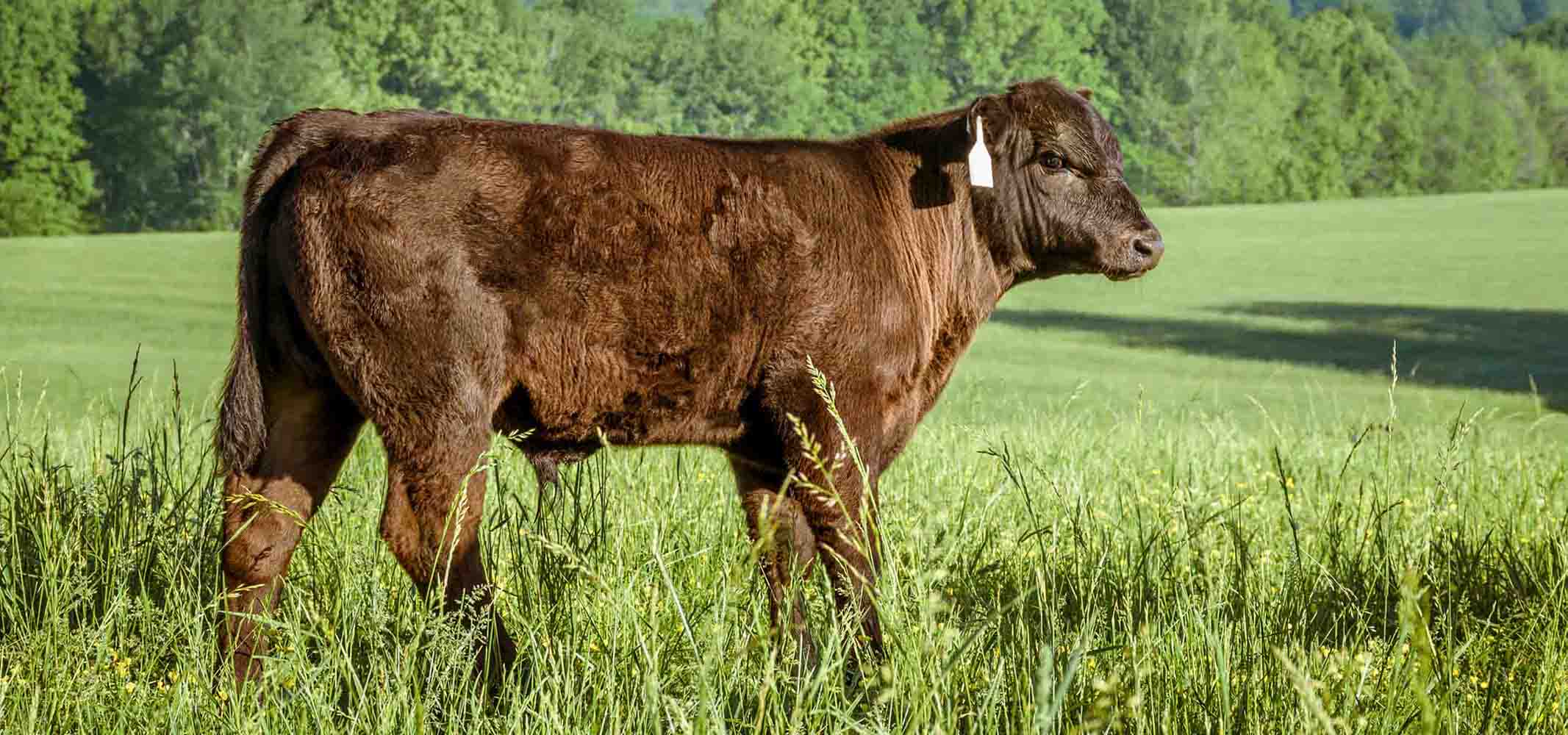
Bovine respiratory disease (BRD) remains one of the most common health challenges for cattle, making early detection of symptoms critical. By recognizing subtle signs of a sick calf and using proven tools like the D.A.R.T. assessment, producers can act quickly and treat BRD effectively.
Dealing with a sick calf is not a unique or new challenge across the cattle industry, especially when it comes to bovine respiratory disease (BRD), also known as shipping fever. Even after taking steps to build immunity and mitigate BRD risk, we know some calves are going to get sick. That’s why cattle producers need to put on their detective caps and look for the smallest clues that will lead to an early BRD diagnosis.
A sick calf can be hard to identify in a group, making a keen eye and solid evaluation protocol essential. With the proper investigative tools, producers can maximize their chances for success when treating BRD in cattle.
Look for bovine respiratory disease symptoms
The sooner producers can take action and treat a sick calf, the more likely the calf will respond to treatment. According to Matt Washburn, DVM, Boehringer Ingelheim, finding those calves early can be a real challenge. Having trained personnel to identify bovine respiratory disease symptoms can be the difference in whether treatments are successful or not:
- Decline in appetite is one of the easier indications of a sick calf. If calves go from consuming an accessible diet to not eating as much, or in some cases not eating anything, we should be flagging them for further evaluation.
- Key body language that indicates a calf may feel sick includes droopy ears, resting more than normal, and moving sluggishly or slowly.
- A calf may suffer from a variety of visual symptoms, all depending on what is causing them to get sick. Drainage from either the eyes or nose is an indicator of bovine respiratory disease.
These clinical signs of sickness are not necessarily unique to BRD, but are a sure way to flag calves that are becoming sick.
Evaluate the evidence
“It’s important to utilize a veterinarian to train staff to examine cattle for bovine respiratory disease symptoms in order to decide if that animal needs to be treated,” said Dr. Washburn. “The initial exam will usually begin with evaluating attitude and appetite.”
When a calf is showing bovine respiratory disease symptoms, it is essential to pull that animal from the herd and evaluate them further. High body temperature and irregular breathing can both be indications of calves that need treatment.
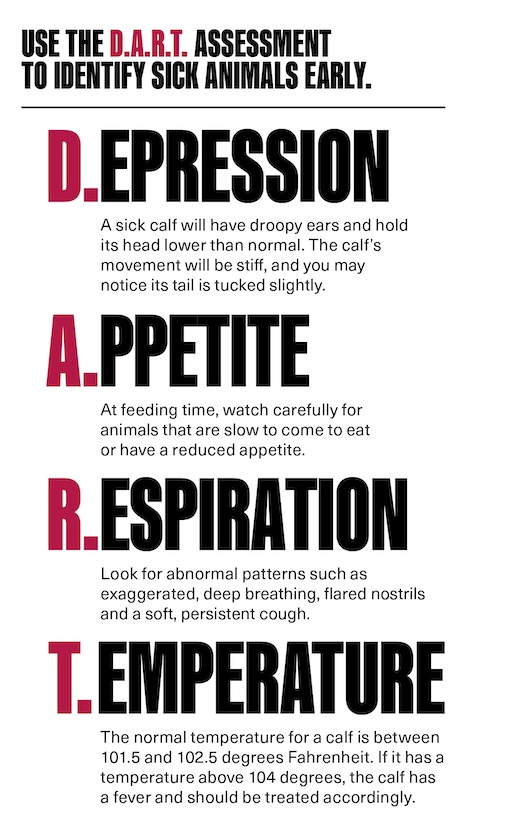
Some operations may identify and evaluate cattle using the D.A.R.T. assessment, which looks at four areas: depression, appetite, respiratory rate and temperature.
“D.A.R.T. is an easy way to remember what we are looking for when we suspect BRD in cattle,” shared Dr. Washburn. “However, it’s also essential to be consistent when checking cattle — whether it’s the frequency of cattle checks or ensuring the person performing them is properly trained.”
Treat cattle for BRD
Once it’s determined a calf needs to be treated for BRD, producers should find an antibiotic that best helps the calf fight infection. But not every antibiotic is created equally, making it worthwhile for producers to find a fast-acting, long-lasting antibiotic that targets all four BRD-causing pathogens – Mannheimia haemolytica, Pasteurella multocida, Histophilus somni and Mycoplasma bovis.
“Long-acting antibiotics can give us the opportunity to get calves back to their home pen sooner, which usually means less stress for the calf and, ideally, a faster recovery,” said Dr. Washburn. “It’s important to allow sufficient time for an antibiotic to work before deciding whether re-treatment is warranted. I recommend working with a veterinarian to establish guidelines on how long to wait before deciding to re-treat. This waiting period depends on what antibiotic is being used.”
Diagnostic testing with the help of your veterinarian can also be a useful tool to pinpoint the cause of respiratory infections.
Learn more about how ZACTRAN® (gamithromycin) can help you treat BRD quickly and effectively to get calves back on track.
ZACTRAN IMPORTANT SAFETY INFORMATION: For use in cattle only. Do not treat cattle within 35 days of slaughter. Because a discard time in milk has not been established, do not use in female dairy cattle 20 months of age or older, or in calves to be processed for veal. The effects of ZACTRAN on bovine reproductive performance, pregnancy and lactation have not been determined. Subcutaneous injection may cause a transient local tissue reaction in some cattle that may result in trim loss of edible tissues at slaughter. NOT FOR USE IN HUMANS. KEEP OUT OF REACH OF CHILDREN.
ZACTRAN® is a registered trademark of Boehringer Ingelheim Animal Health France, used under license. ©2026 Boehringer Ingelheim Animal Health USA Inc., Duluth, GA. All rights reserved. US-RUM-0060-2025-V2