
Calves and Cows
Calves and Cows

Respiratory health

Don’t let bovine respiratory disease go after your calves. Or your bottom line.

Bovine respiratory disease (BRD) can be frustrating for beef producers for a number of reasons. The multitude of factors that contribute to the disease can make it difficult to prevent or manage. And BRD can lead to significant economic losses:

  • It's the costliest cause of sickness and death in the beef finishing industry.1
  • In 2011, an estimated 16% of cattle on feedlots with > 1,000 head were affected by BRD.2
  • It costs producers $900 million in losses each year from death, reduced feed efficiency and treatment costs.4


Help protect your investment by working with your veterinarian on a BRD prevention protocol, and stay current on the most recent BRD information:

Bovine respiratory disease (BRD)

What is bovine respiratory disease (BRD)?

  • Any disease of the upper and/or lower respiratory tracts
  • Also known as shipping fever because it’s often associated with transport


Cattle affected

  • Most commonly occurs in weaned beef cattle as they move to the feedlot
  • Increasing incidence in preweaned calves known commonly as summer pneumonia


Disease development

  • A multifactorial etiology that may include viruses, bacteria, host immunity, environmental stressors, nutrition and more
  • Typically, stress associated with transportation, commingling, weaning and other factors predisposes the animal to infection
  • The lining of the respiratory tract may be damaged by viruses such as:
    • Bovine viral diarrhea virus (BVDV) Types 1a, 1b and 2
    • Infectious bovine rhinotracheitis (IBR) caused by bovine herpesvirus-1 (BHV-1)
    • Bovine respiratory syncytial virus (BRSV)
    • Parainfluenza 3 (Pl3) virus
  • Viral damage opens the door for bacteria to invade the lungs:
    • Mannheimia haemolytica
    • Pasteurella multocida
    • Histophilus somni
    • Mycoplasma bovis


Clinical signs

  • Severity of signs can vary, depending on the organism(s) involved, but may include:
    • Labored breathing
    • Nasal discharge
    • Coughing
    • Reduced food and water intake
    • Fever, depression
    • Reluctance to move


Diagnosis

  • Physical examination
  • Culture and antibiotic sensitivity, lung ultrasound, necropsy and advanced diagnostics


Treatment

  • Identify and treat sick calves early for best outcomes
  • Work with your veterinarian to choose the right antibiotic
  • Monitor outcomes and refine protocols with your veterinarian


Prevention

  • Precondition calves before marketing, including:
    • Vaccinating calves to help build immunity
  • Vaccinate the dam to help her produce good-quality colostrum
  • Metaphylaxis, or mass administration of antibiotics to at-risk calves, may help reduce the number of bacterial organisms present, but will have no effect on viruses

Beef respiratory vaccines

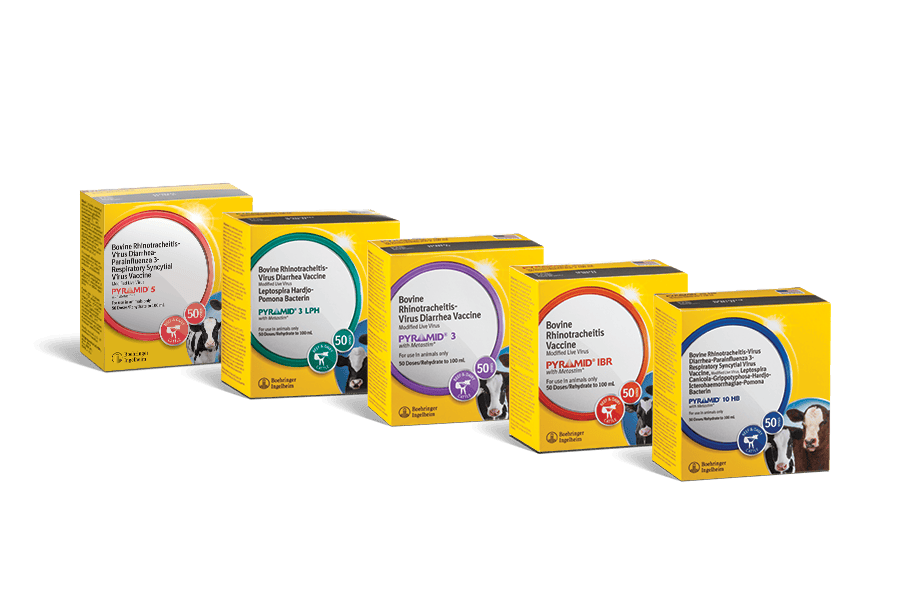
Pyramid Presponse Family

PYRAMID® + PRESPONSE® SQ Vaccines

Pyramid Presponse Family

PYRAMID® + PRESPONSE® SQ Vaccines

Pyramid Family No 4

PYRAMID® Vaccines

Pyramid Family No 4

PYRAMID® Vaccines

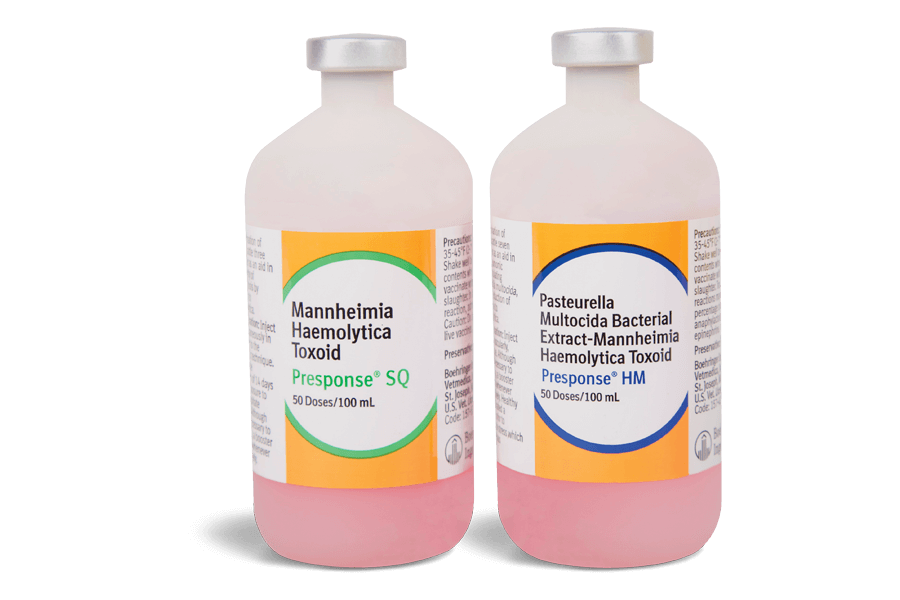
Presponse Product Bottles

PRESPONSE® Vaccines

Presponse Product Bottles

PRESPONSE® Vaccines

Pyramid Presponse Family

PYRAMID® + PRESPONSE® SQ Vaccines

Pyramid Presponse Family

PYRAMID® + PRESPONSE® SQ Vaccines

Pyramid Family No 4

PYRAMID® Vaccines

Pyramid Family No 4

PYRAMID® Vaccines

Presponse Product Bottles

PRESPONSE® Vaccines

Presponse Product Bottles

PRESPONSE® Vaccines

Express Boxes

EXPRESS® Vaccines

Express Boxes

EXPRESS® Vaccines

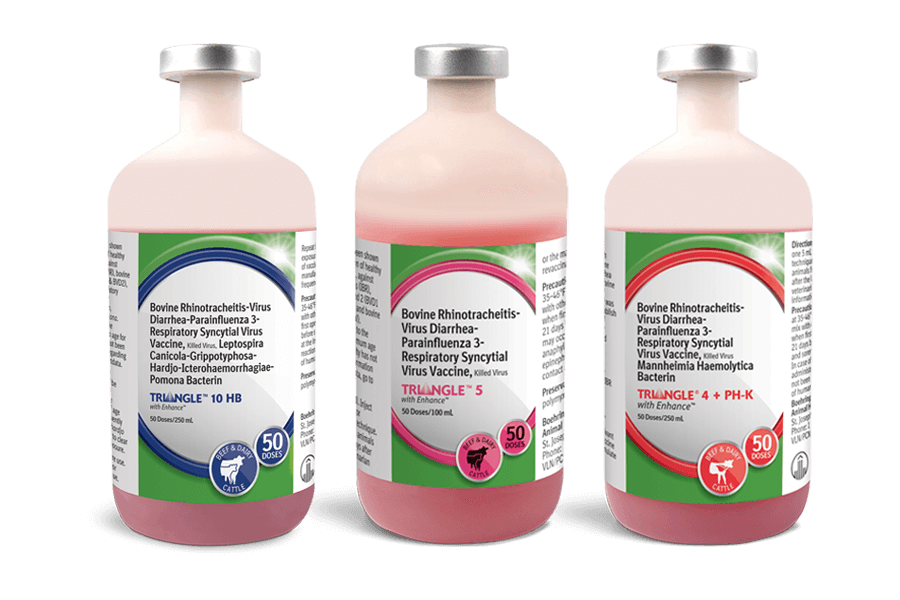
Triangle Family Products

TRIANGLE® Vaccines

Triangle Family Products

TRIANGLE® Vaccines

Express Boxes

EXPRESS® Vaccines

Express Boxes

EXPRESS® Vaccines

Triangle Family Products

TRIANGLE® Vaccines

Triangle Family Products

TRIANGLE® Vaccines

Beef respiratory treatment

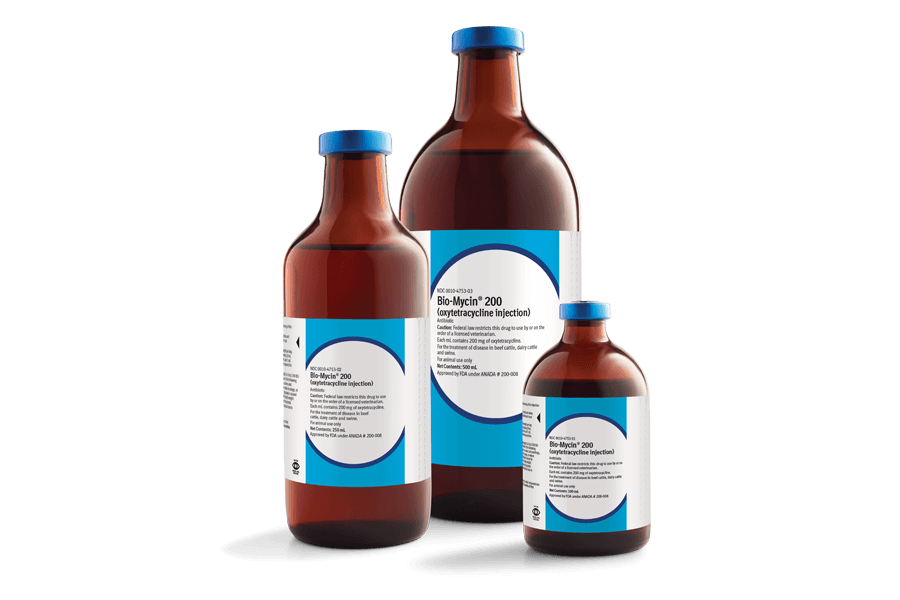
BioMycin Family Product Bottles

BIOMYCIN®200 (oxytetracycline injection)

BioMycin Family Product Bottles

BIOMYCIN®200 (oxytetracycline injection)

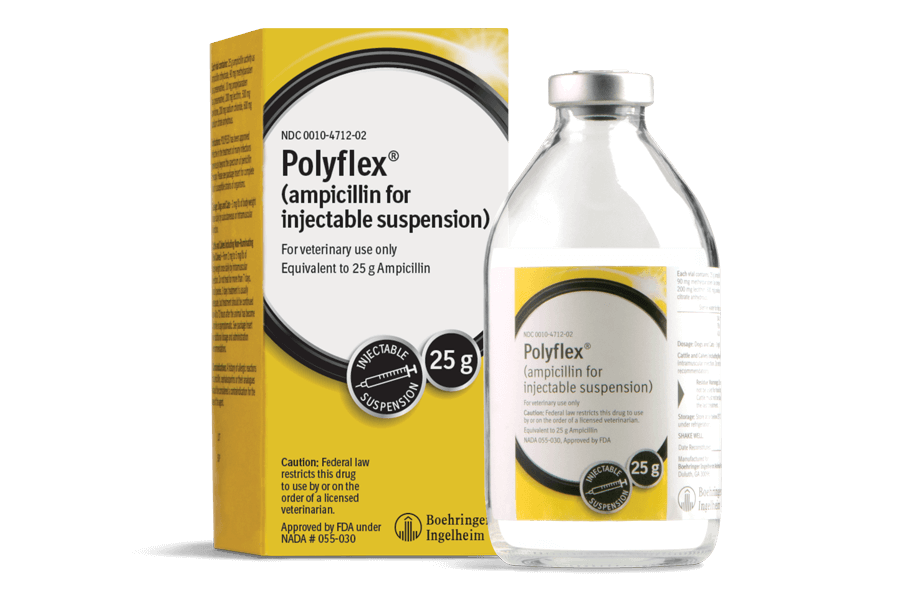
Polyflex Product

POLYFLEX®(ampicillin for injectable suspension)

Polyflex Product

POLYFLEX®(ampicillin for injectable suspension)

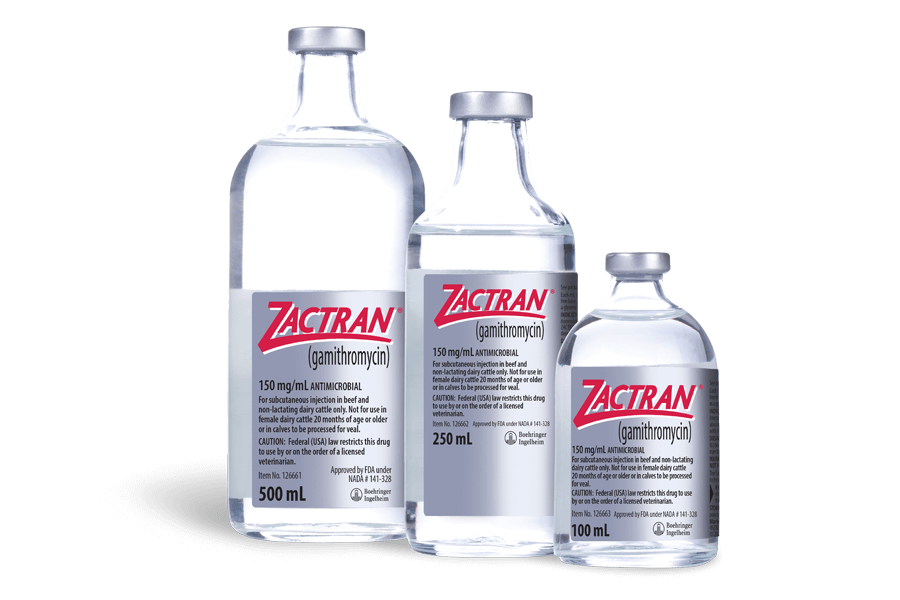
Zactran Product Bottles

ZACTRAN® (gamithromycin)

Zactran Product Bottles

ZACTRAN® (gamithromycin)

BioMycin Family Product Bottles

BIOMYCIN®200 (oxytetracycline injection)

BioMycin Family Product Bottles

BIOMYCIN®200 (oxytetracycline injection)

Polyflex Product

POLYFLEX®(ampicillin for injectable suspension)

Polyflex Product

POLYFLEX®(ampicillin for injectable suspension)

Zactran Product Bottles

ZACTRAN® (gamithromycin)

Zactran Product Bottles

ZACTRAN® (gamithromycin)

Important safety information

BIO-MYCIN IMPORTANT SAFETY INFORMATION: When administered to cattle, muscle discoloration may necessitate trimming of the injection site(s) and surrounding tissues during the dressing procedure. Warning: Discontinue treatment at least 28 days prior to slaughter. Milk taken from animals during treatment and for 96 hours after the last treatment must not be used for food. Rapid intravenous administration may result in animal collapse. Product should be administered intravenously slowly over a period of at least 5 minutes. Exceeding labeled dose or more than 10 mL per site may result in antibiotic residues beyond the withdrawal period. Reported adverse reactions may be attributed to anaphylaxis or to cardiovascular collapse of unknown cause. For more information, including full prescribing information, visit https://bit.ly/45mr0Ci or call 888-637-4251. 


POLYFLEX RESIDUE WARNING: Do not treat cattle for more than 7 days. Milk from treated cows must not be used for food during treatment, and for 48 hours (4 milkings) after the last treatment. Cattle must not be slaughtered for food during treatment, and for 144 hours (6 days) after the last treatment. For full prescribing information please visit https://bit.ly/3EtN2Ib or call 888-637-4251.


ZACTRAN IMPORTANT SAFETY INFORMATION: For use in cattle only. Do not treat cattle within 35 days of slaughter. Because a discard time in milk has not been established, do not use in female dairy cattle 20 months of age or older, or in calves to be processed for veal. The effects of ZACTRAN on bovine reproductive performance, pregnancy and lactation have not been determined. Subcutaneous injection may cause a transient local tissue reaction in some cattle that may result in trim loss of edible tissues at slaughter. NOT FOR USE IN HUMANS. KEEP OUT OF REACH OF CHILDREN. For full prescribing information please visit https://bit.ly/ZactranPI or call 888-637-4251.

Green Block

Explore beef cattle products

Count on Boehringer Ingelheim for a wide array of products to help keep your beef cattle in good health and at peak performance.

1 Duff GC, Galyean ML. Board-invited review: recent advances in management of highly stressed, newly received feedlot cattle. J Anim Sci 2007;85(3):823–840. doi: 10.2527/jas.2006-501.
United States Department of Agriculture, Animal and Plant Health Inspection Service. Feedlot 2011: Part IV. Health and Health Management on U.S. Feedlots with a Capacity of 1,000 or More Head. Fort Collins (CO): USDA–APHIS–VS–CEAH–NAHMS; 2013. Available from: https://www.aphis.usda.gov/sites/default/files/Feed11_dr_PartIV_1.pdf
Loneragan GH, Dargatz DA, Morley PS, Smith MA. Trends In mortality ratios among cattle In U.S. feedlots. J Am Vet Med Assoc 2001;219(8):1122–1127. 
Oklahoma State University. Bovine respiratory disease: new research to tackle major concern for cattle industry. Science Daily. 2010 Mar 5 [cited 2019 Apr]; Available from: https://www.sciencedaily.com/releases/2010/03/100305112203.htm


BIO-MYCIN®, EXPRESS®, POLYFLEX®, PYRAMID®, PRESPONSE® and TRIANGLE® are registered trademarks of Boehringer Ingelheim Animal Health USA Inc. ZACTRAN® is a registered trademark of Boehringer Ingelheim Animal Health France, used under license. ©2026 Boehringer Ingelheim Animal Health USA Inc., Duluth, GA. All rights reserved. US-RUM-0065-2025