Cows and Calves
Cows and Calves

Reproductive management

Reproductive efficiency: Few things have greater impact on your profitability

Reproductive diseases can have a devastating impact on your operation’s success and your financial well-being. Bovine reproductive conditions include:
Bovine viral diarrhea virus (BVDV)

What is bovine viral diarrhea?

  • BVDV is a highly contagious virus that can infect both beef cattle and dairy cattle
  • BVDV can contribute to reproductive disease (abortions and birth defects), respiratory disease and, less commonly, diarrhea
  • BVDV Types 1a, 1b and 2 are extremely contagious
  • BVDV Type 1b is currently the most prevalent subtype in the United States1


Cattle affected

  • Most infections are acquired after birth, and are transient, meaning they only last a few weeks
  • A small percentage of infections are acquired in utero, and the calves are persistently infected (PI), shedding the virus for their entire lives 


Disease development

  • In pregnant cows, the virus can be transferred through the bloodstream to the fetus (vertical transmission)
  • Infected animals can shed the virus in saliva, nasal and eye discharge, urine, feces, milk, semen and aborted fetal tissues, exposing other animals (horizontal transmission)
  • Exposure to BVDV can cause suppression of the immune system making animals more susceptible to other diseases


Signs

  • Most infections are subclinical, meaning cattle show no signs
  • Signs can vary from mild to severe, but relate to reproductive disease (abortions and birth defects) or respiratory disease 
  • In rare occurrences, PI calves can develop mucosal disease, resulting in diarrhea, digestive tract ulceration and often death


Diagnosis

  • Diagnosis is generally made by a combination of physical exam and blood, milk or tissue testing


Treatment

  • There is no treatment for BVDV, which is why prevention is so important
  • Your veterinarian may recommend supportive care and antibiotics for secondary infections


Prevention

  • Identify and eliminate PI calves
  • Prevent exposure with good biosecurity, testing and surveillance programs
  • Vaccinate cows to prevent fetal infections and boost colostrum quality
  • Vaccinate calves to boost immunity
  • Choose vaccines labeled to protect against BVDV Types 1 and 2 including subtype 1b

Infectious bovine rhinotracheitis (IBR)

What is infectious bovine rhinotracheitis?

  • A contagious viral infection caused by bovine herpesvirus-1 (BHV-1)
  • Often a contributing factor in bovine respiratory disease complex
  • Can also lead to reproductive disease and abortion


Cattle affected

  • All ages of cattle are potentially affected


Disease development

  • Spread through nasal and genital discharge, fetal fluids, embryos and semen
  • Can infect the ovaries and placenta, leading to abortions in pregnant cattle


Signs

  • Respiratory disease may appear as nasal discharge, sneezing, eye inflammation, ulcerative lesions inside the nose, coughing 
  • Abortions, birth defects, infertility


Diagnosis

  • Physical exam and blood or tissue testing


Treatment

  • There is no treatment
  • Your veterinarian may recommend antibiotics for secondary infections or other supportive treatments


Prevention

  • Vaccinate cows to protect against abortion and boost colostrum quality
  • Vaccinate calves to boost immunity

Leptospirosis

What is leptospirosis?

  • A bacterial disease caused by numerous serovars of Leptospira, spiral-shaped bacteria called spirochetes
  • Common serovars in North America include Hardjo and Pomona, and to a lesser degree Grippotyphosa, Bratislava, Icterohaemorrhagiae and Canicola 
  • The infection can be zoonotic, meaning it can be passed from animals to people


Cattle affected

  • Cattle of any age can be affected


Disease development

  • Wildlife such as rodents, and swine, may harbor the infection and shed bacteria; spirochetes often live in stagnant water
  • Infected urine and placental fluids serve as sources of infection
  • Spirochetes invade through the mucous membranes (such as the mouth tissues) or in abrasions
  • Bacteria can travel in the bloodstream to organs such as the kidneys and reproductive tract


Signs

  • Clinical signs can vary, depending on the serovar of bacteria
  • Some infections may be subclinical, meaning there are no signs
  • Fever, anorexia, depression, dark-red urine
  • Abortion, stillbirths, weak offspring and prolonged calving interval


Diagnosis

  • Bacteriological culture of blood, urine or tissue samples, or more advanced diagnostics


Treatment

  • Work with your veterinarian to choose the right antibiotic


Prevention

  • Vaccination
  • Prevent exposure to swampy ground or streams
  • Control rodent and wildlife populations

Trichomoniasis

What is trichomoniasis?

  • A sexually transmitted disease caused by a protozoan, Tritrichomonas foetus 
  • A reportable disease in many parts of the United States


Cattle affected

  • Heifers, cows and bulls could potentially be infected


Disease development

  • Organisms are passed from an infected bull to uninfected cows, or from infected cows to uninfected bulls, during mating
  • This organism is isolated from the bull's penis and the folds on the mucosal surfaces of the prepuce
  • Organisms can also be transmitted during artificial insemination (AI) with frozen semen from infected bull


Signs

  • Overt signs usually not apparent
  • May present as major economic losses from a reduced calf crop due to early embryonic loss or abortion
  • Females may experience abortion, failure to conceive, prolonged calving periods, pyometra, vaginal discharge


Diagnosis

  • It’s generally recommended to test bulls prior to breeding season with a preputial fluid sample
  • The sample can be cultured or PCR can be used to check for presence of the organism
  • Advanced diagnostic tests may be warranted


Treatment

  • The only way to guarantee an infected animal doesn’t spread the infectious organism is to send the animal to harvest


Prevention

  • Consider using AI to aid in trichomoniasis control
  • Test bulls for trichomoniasis
  • Good biosecurity protocols
  • Vaccination can help reduce infection or disease severity

Vibriosis

What is vibriosis?

  • A bacterial infection caused by Campylobacter fetus


Cattle affected

  • Young, pregnant cattle may be most severely affected


Disease development

  • Sexually transmitted disease
  • Bulls and cows can be infected
  • Can be passed from infected cows to uninfected bulls or infected bulls to uninfected cows during natural mating


Signs

  • Cattle may not display overt signs of disease
  • Reproductive disease may appear as abortion, infertility, uterine infection, embryonic and fetal death


Diagnosis

  • Blood or tissue cultures
  • Uterine/Vaginal swabs shortly after abortion


Treatment

  • Consult your veterinarian about antibiotic treatment


Prevention

  • Whole-herd vaccination is the most practical way to prevent sexually transmitted diseases

Estrus synchronization in beef operations

A growing number of producers use estrus synchronization and artificial insemination to advance genetic change in their beef herds, there are simple, inexpensive protocols that producers can use with natural service. These protocols deliver numerous benefits including:

  • Less time and labor needed to breed cows and heifers
  • Shortened calving season
  • More uniform calf crop
  • Calves born earlier in season tend to have higher weaning weights


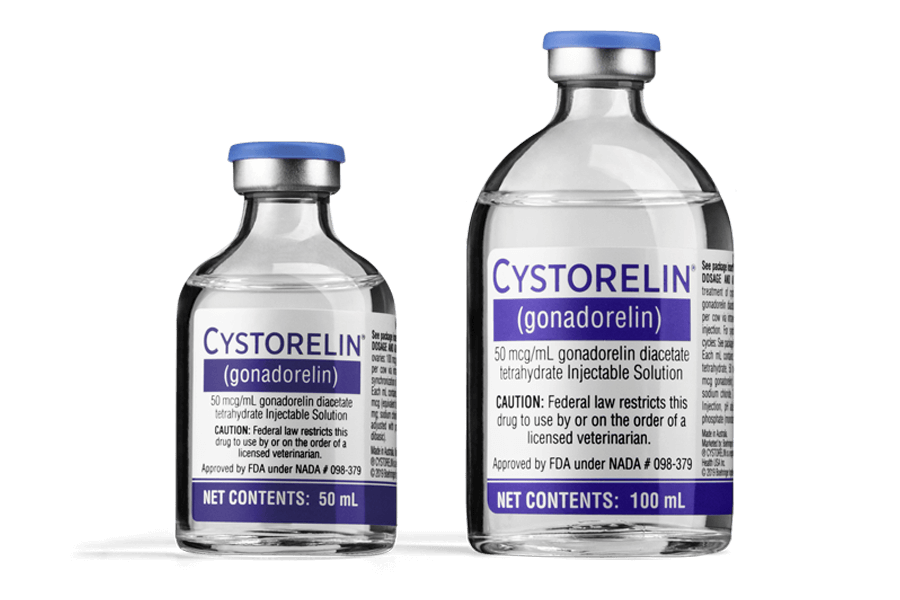
CYSTORELIN® (gonadorelin) is a gonadotropin-releasing hormone (gnRH) product that treats ovarian follicular cysts in dairy cattle. It initiates ovulation and luteinization. CYSTORELIN can be used in combination with cloprostenol sodium to synchronize estrous cycles to allow for fixed-time artificial insemination (FTAI) in lactating dairy and beef cows.


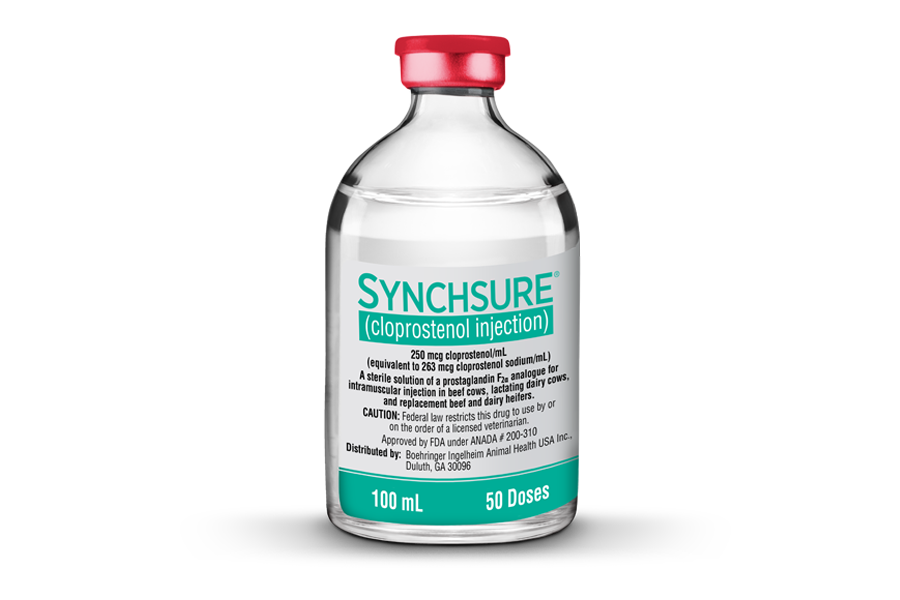
SYNCHSURE® (cloprostenol sodium) is a prostaglandin that helps synchronize estrus in your cows and heifers, usually resulting in estrus two to five days after treatment when used in cycling animals. This helps to manage breedings, so herd can conceive and calve on schedule.


Work with your veterinarian to find the estrus synchronization products and protocols that are right for your herd.

Beef reproductive products

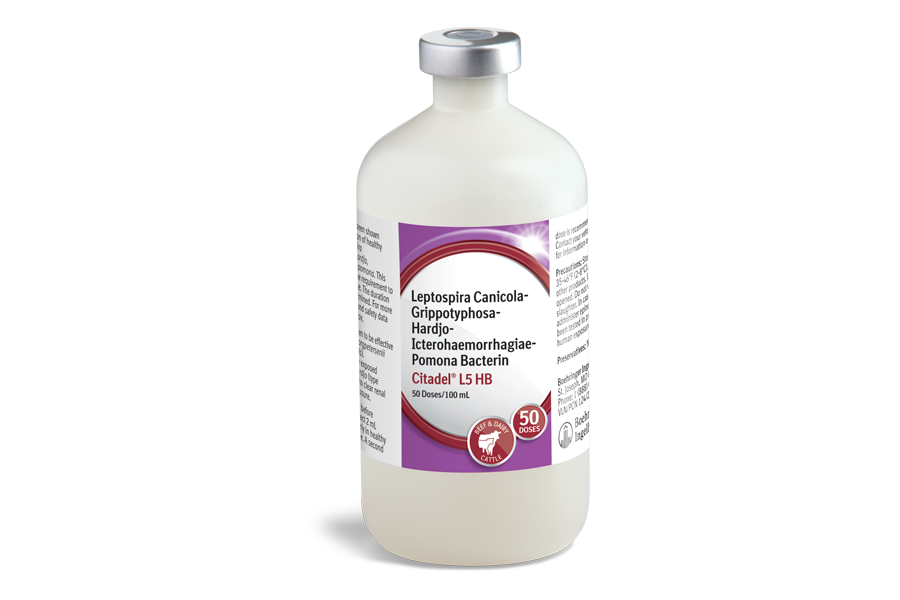
Citadel Product Bottle

CITADEL® Vaccine

Citadel Product Bottle

CITADEL® Vaccine

Express FP Box Group

EXPRESS® FP Vaccines

Express FP Box Group

EXPRESS® FP Vaccines

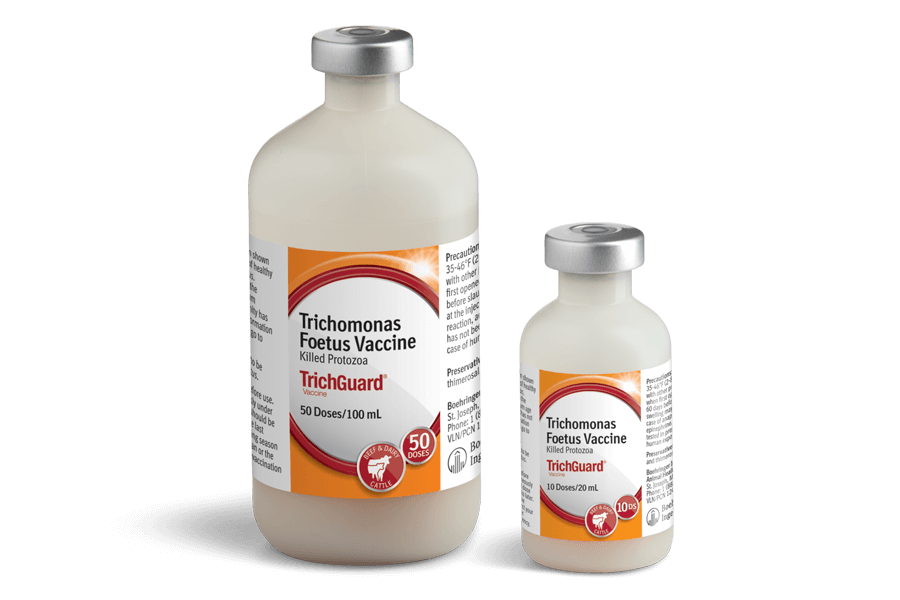
Trichguard Group

TRICHGUARD® Vaccine

Trichguard Group

TRICHGUARD® Vaccine

Citadel Product Bottle

CITADEL® Vaccine

Citadel Product Bottle

CITADEL® Vaccine

Express FP Box Group

EXPRESS® FP Vaccines

Express FP Box Group

EXPRESS® FP Vaccines

Trichguard Group

TRICHGUARD® Vaccine

Trichguard Group

TRICHGUARD® Vaccine

Synchsure Product Bottle

SYNCHSURE® (cloprostenol sodium) Hormone
Synchsure Product Bottle

SYNCHSURE® (cloprostenol sodium) Hormone

Cystorelin Product Bottles

CYSTORELIN® (gonadorelin) Hormone

Cystorelin Product Bottles

CYSTORELIN® (gonadorelin) Hormone

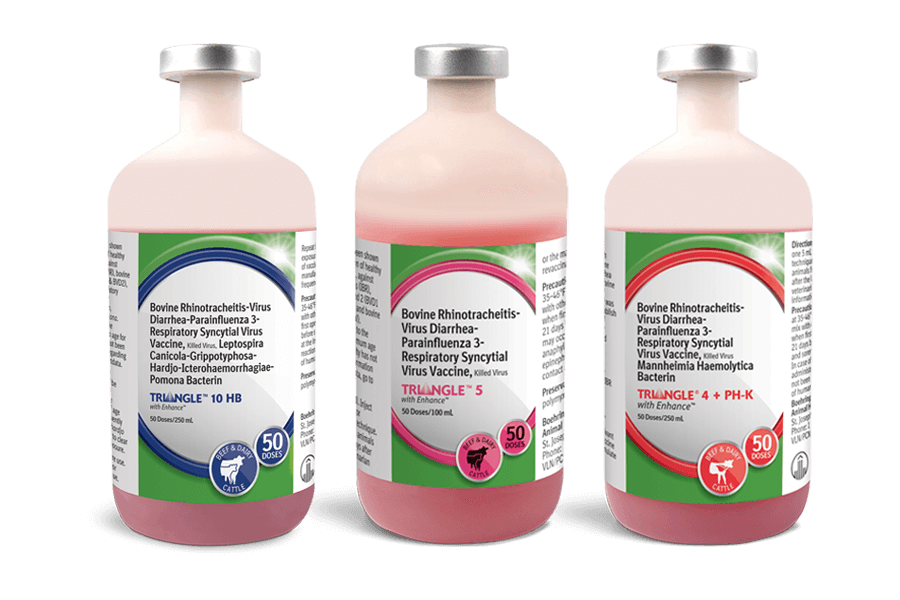
Triangle Family Products

TRIANGLE® Vaccines

Triangle Family Products

TRIANGLE® Vaccines

Synchsure Product Bottle

SYNCHSURE® (cloprostenol sodium) Hormone

Synchsure Product Bottle

SYNCHSURE® (cloprostenol sodium) Hormone

Cystorelin Product Bottles

CYSTORELIN® (gonadorelin) Hormone

Cystorelin Product Bottles

CYSTORELIN® (gonadorelin) Hormone

Triangle Family Products

TRIANGLE® Vaccines

Triangle Family Products

TRIANGLE® Vaccines

Important safety information

SYNCHSURE IMPORTANT SAFETY INFORMATION: For animal use only, not for human use. Keep out of reach of children. Women of childbearing age, asthmatics and persons with bronchial and other respiratory problems should exercise extreme caution when handling this product. In the early stages, women may be unaware of their pregnancies. SYNCHSURE (cloprostenol sodium) is readily absorbed through the skin and may cause abortion and/or bronchospasms: direct contact with the skin should therefore be avoided. Accidental spillage on the skin should be washed off immediately with soap and water. 


CYSTORELIN IMPORTANT SAFETY INFORMATION: Do not use in humans. Keep this and all drugs out of the reach of children. 

Green Block

Explore beef cattle products

Count on Boehringer Ingelheim for a wide array of products to help keep your beef cattle in good health and at peak performance.

Fulton RW, Cook BJ, Payton ME, et al. Immune response to bovine viral diarrhea virus (BVDV) vaccines detecting antibodies to BVDV subtypes 1a, 1b, 2a and 2c. Vaccine 2020:38(24);4032-4037.


CITADEL®, CYSTORELIN®, EXPRESS®, the EXPRESS Logo®, SYNCHSURE®, TRIANGLE® and TRICHGUARD® are registered trademarks of Boehringer Ingelheim Animal Health USA Inc. ©2026 Boehringer Ingelheim Animal Health USA Inc., Duluth, GA. All rights reserved. US-RUM-0064-2025