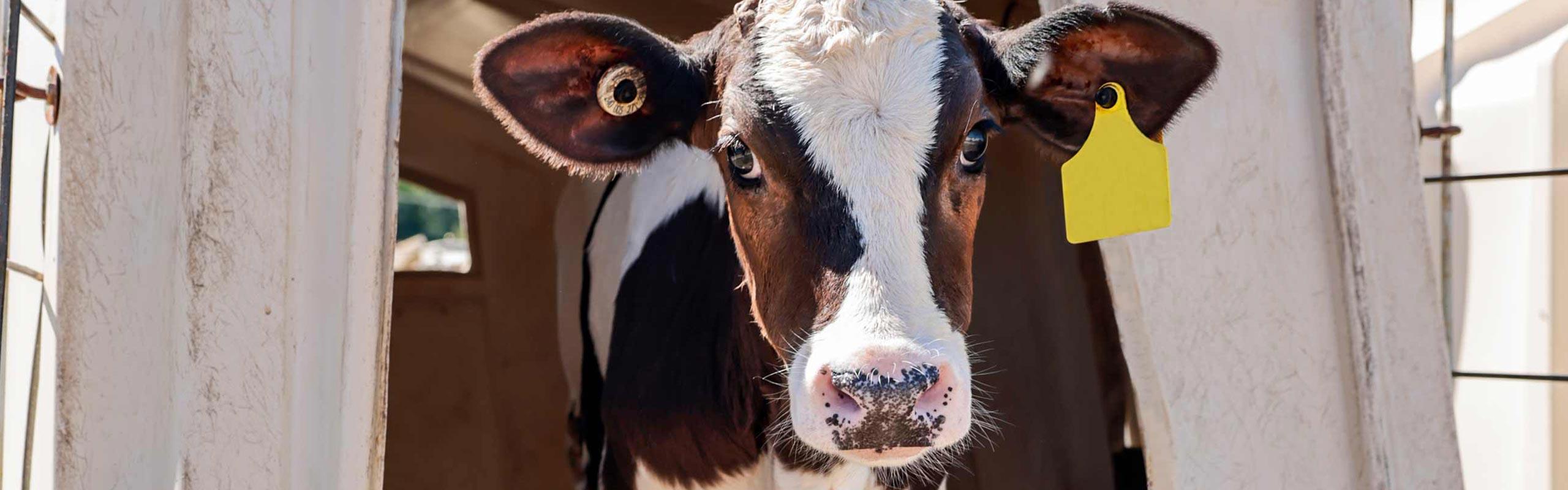
Calf up close
Calf up close

Clostridial diseases and pinkeye

For clostridial diseases and pinkeye, prevention is better than treatment

Clostridial diseases

  • Various species of the bacterial genus Clostridium can cause severe and often fatal diseases in cattle 
  • Bacteria can form spores that survive in the soil for years
  • Cattle can become infected by consuming clostridial spores in contaminated pastures or feed, or when spores are introduced into a wound
  • Both the bacteria and the toxins they produce can cause disease 
  • Treatment options are limited, so prevention is key
     

Infectious bovine keratoconjunctivitis (IBK or pinkeye)

  • A highly contagious disease that can spread quickly
  • U.S. cattle producers lose an estimated $150 million annually due to losses associated with pinkeye1
  • In a study, calves with pinkeye weighed an average of 19.6 pounds less at weaning than healthy calves1
  • One or both eyes may be affected
  • If left untreated, pinkeye can lead to severe eye damage and blindness


For more details, click on specific diseases below.

Blackleg

What is blackleg?

  • A bacterial disease affecting the skeletal and cardiac muscles caused by Clostridium chauvoei
  • Animals often die within 12 to 48 hours


Cattle affected

  • Occurs mostly in rapidly growing animals 6 months to 2 years of age, but other ages can be affected
  • Animals are often in excellent body condition and on a high plane of nutrition


Disease development

  • Blackleg doesn’t pass from animal to animal; cattle become infected from ingesting spores in soil or by contamination of a wound
  • Spores can exist in the animal’s bloodstream and muscles without causing disease
  • Usually, some kind of muscle trauma enables the spores to grow and release toxins, causing local tissue death


Signs

  • Lameness, depression, anorexia, fever, sudden death
  • Swellings can develop at various body locations


Diagnosis

  • Presumptive diagnosis made based on signs and visible lesions
  • Confirmation by tissue testing
  • Affected muscles are dark red or black with a rancid odor


Treatment

  • Because animals typically die quickly, there’s often no time for treatment
  • If there is time, antibiotics and supportive care (anti-inflammatory drugs, fluids) may help


Disposal

  • Animals that die from blackleg can seed the environment with spores, increasing risk for future outbreaks
  • Carcasses should be burned or buried in deep ground


Prevention

  • Vaccination of calves and adult cattle

Malignant edema (gas gangrene)

What is gas gangrene (malignant edema)?

  • A bacterial disease caused by Clostridium septicum, but other species may be involved, including C. chauvoeiC. sordelliiC. perfringens and C. novyi 


Cattle affected

  • Cattle of any age


Disease development

  • Spores from the environment enter the animal through wounds in the skin or mucosa
  • May occur in postpartum dairy cattle, secondary to calving trauma


Signs

  • Anorexia
  • Fever
  • Pitting edema, sloughing skin
  • Death


Diagnosis

  • Presumptive diagnosis made based on signs and visible lesions
  • Confirmation by tissue testing


Treatment

  • If there is time, antibiotics and anti-inflammatory drugs may help


Prevention

  • Proper sanitation of surgical instruments
  • Multivalent vaccines are available

Enterotoxemia

What is enterotoxemia?

  • A bacterial disease of the digestive tract caused by Clostridium perfringens Type C
  • Infection can also occur with C. perfringens Types A, B and D, but less commonly


Cattle affected

  • Newborn/young calves/older cattle on feed in feedlots


Disease development

  • C. perfringens bacteria, in low numbers, are normal inhabitants of the GI tract
  • Inciting causes, such as stress or large intake of feed or milk or improperly mixed milk replacer, can result in bacterial overgrowth
  • The bacteria produce toxins, which damage the gut wall and can be absorbed into the bloodstream


Signs

  • Depression, abdominal pain and bloating, diarrhea (sometimes with blood and mucus)
  • Sudden death


Diagnosis

  • Tissue analysis (necropsy), bacterial culture


Treatment

  • Antibiotics, Clostridium anti-toxin and supportive care including intravenous fluids and anti-inflammatory drugs


Prevention

  • Vaccinate dams at pregnancy check to improve colostrum
  • Vaccinate calves shortly after birth
  • Ensure consistent feeding practices: solids, temperature and timing of feeding

Infectious bovine keratoconjunctivitis (IBK or pinkeye)

What is pinkeye?

  • A highly contagious disease, causing inflammation of the cornea (clear surface of the eye) and conjunctiva (pink tissue lining the eyelids)
  • Can lead to corneal ulceration and blindness
  • Virus involved may include infectious bovine rhinotracheitis (IBR)
  • Bacteria involved may include Moraxella bovisMoraxella bovoculiMycoplasma bovis and Mycoplasma bovoculi 


Cattle affected

  • Calves are more likely to develop pinkeye, but any age can be affected


Disease development

  • Pinkeye is multifactorial, meaning that multiple factors can contribute to the development of disease
  • It usually starts with eye irritation (dust, flies, sunlight, trauma or viral disease)
  • Bacteria are transmitted by contact with secretions from an infected animal, face flies or objects carrying organisms


Signs

  • Excessive tearing, sensitivity to light
  • Loss of appetite
  • Ulcer on surface of cornea, which may appear initially as a white spot


Diagnosis

  • Physical exam
  • Eye swab and culture
  • Advanced diagnostics, if needed


Treatment

  • Early intervention is best to minimize eye damage and reduce bacterial spread
  • Topical and/or injectable antibiotics
  • Cover and protect the affected eye with a temporary patch
  • Surgery in severe cases


Prevention

  • Vaccination before typical pinkeye season
  • Clip weeds and tall grass from pasture where possible
  • Fly control
  • Dust control
  • Commercial vaccines protect against Moraxella bovis. In certain situations, a custom-made vaccine may be necessary for Moraxella bovoculiMycoplasma bovis and Mycoplasma bovoculi. These can be ordered by your veterinarian

Dairy clostridial and pinkeye products

Alpha Family Products

ALPHA™ Vaccines

Alpha Family Products

ALPHA™ Vaccines

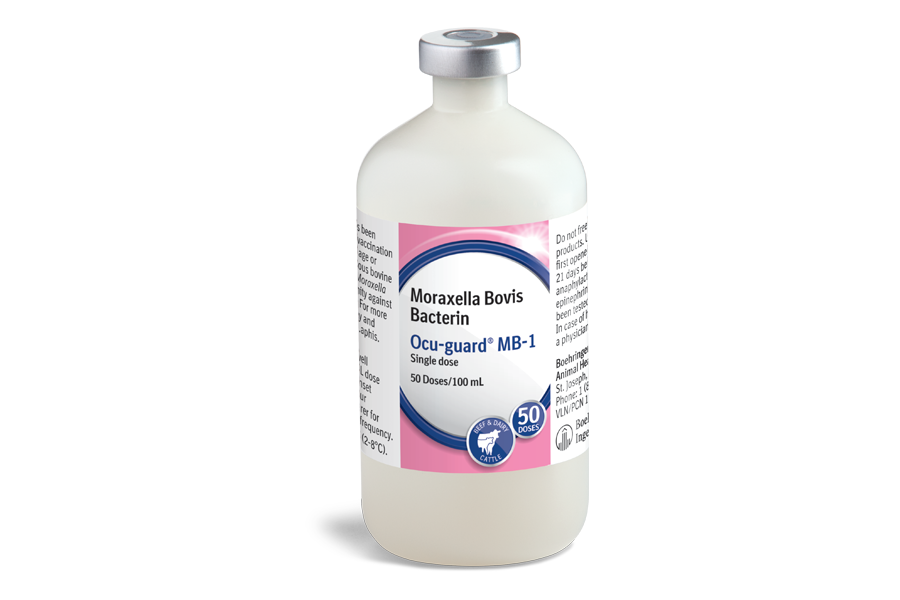
Ocuguard Product Bottle

OCU-GUARD® MB-1 Vaccines

Ocuguard Product Bottle

OCU-GUARD® MB-1 Vaccines

Alpha Family Products

ALPHA™ Vaccines

Alpha Family Products

ALPHA™ Vaccines

Ocuguard Product Bottle

OCU-GUARD® MB-1 Vaccines

Ocuguard Product Bottle

OCU-GUARD® MB-1 Vaccines

Green Block

Explore products

Count on Boehringer Ingelheim for a wide array of products to help keep your dairy cattle in good health and at peak performance.

1 Snowder GD, Van Vleck LD, Cundiff LV, Bennett GL. Genetic and environmental factors associated with incidence of infectious bovine keratoconjunctivitis in preweaned beef calves. J Anim Sci 2005;83:507–518. 


BAR-VAC® and OCU-GUARD® are registered trademarks and ALPHA™ is a trademark of Boehringer Ingelheim Animal Health USA Inc. ALPHA-CD®, ALPHA-7® and ALPHA-7/MB-1®, are registered trademarks and the ALPHA logo™ is a trademark of Boehringer Ingelheim Vetmedica GmbH, used under license. ©2025 Boehringer Ingelheim Animal Health USA Inc., Duluth, GA. All rights reserved. US-RUM-0067-2025