
by Boehringer Ingelheim/May 13, 2026
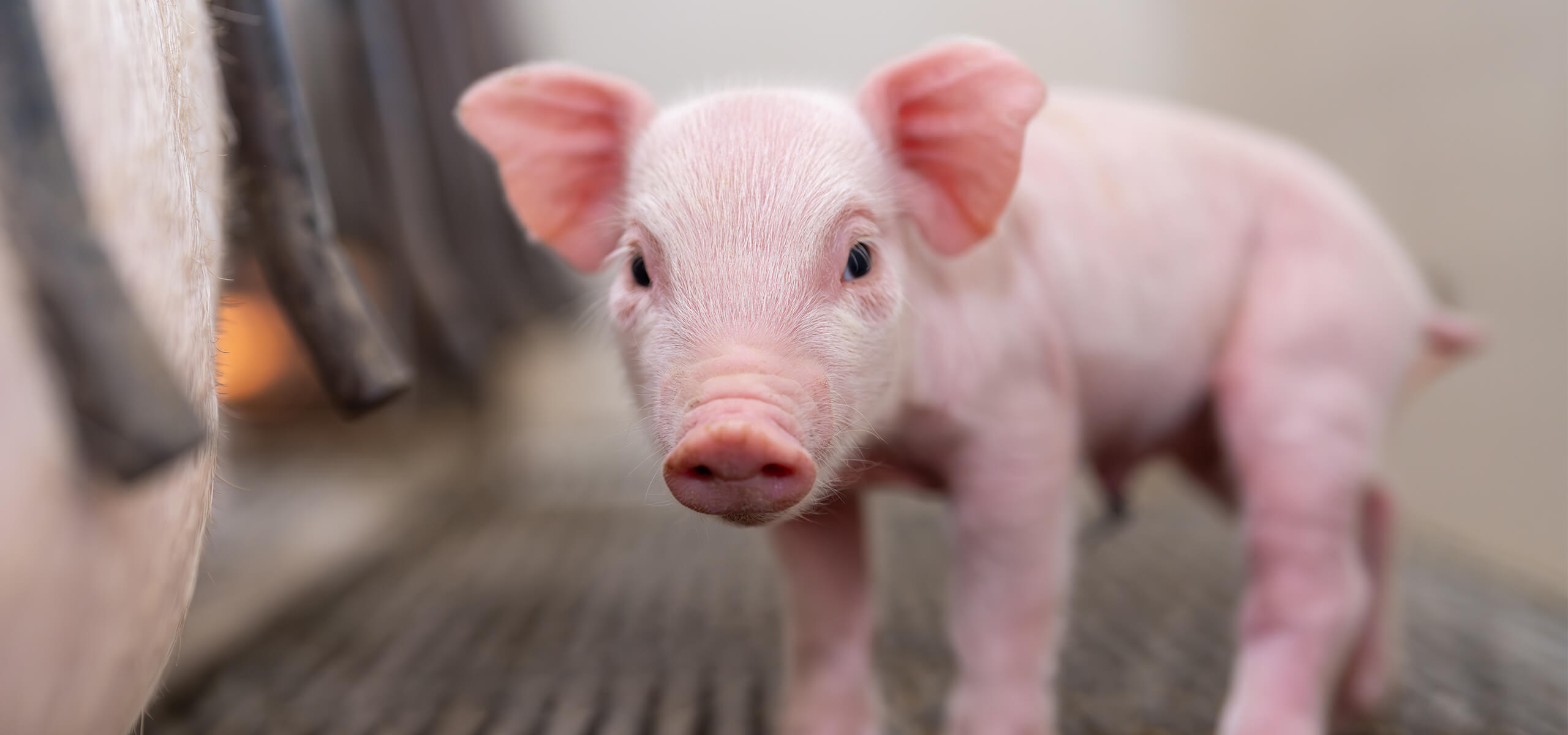
In today’s production environment, understanding and addressing the collective impact of nursery systemic pathogens — particularly Glaesserella parasuis, Mycoplasma hyorhinis and Streptococcus suis — especially in the presence of viral coinfections, is essential to setting pigs up for long-term success.
Why does the nursery window matter?
The transition from weaning to the nursery or wean-to-finish operation is a time of peak vulnerability. Dietary changes, commingling, environmental shifts and waning maternal immunity interact to create a period of high susceptibility to disease.
Nursery systemic pathogens present a significant collective threat to young pigs (nursery and early-finishing stages). Coinfection of bacterial systemic pathogens, including Streptococcus suis (S. suis), Glaesserella parasuis (G. parasuis) and Mycoplasma hyorhinis (M. hyorhinis), is a major cause of post-weaning mortality, with peak incidence occurring across the nursery into the early-growing period (~4–12 weeks of age).2
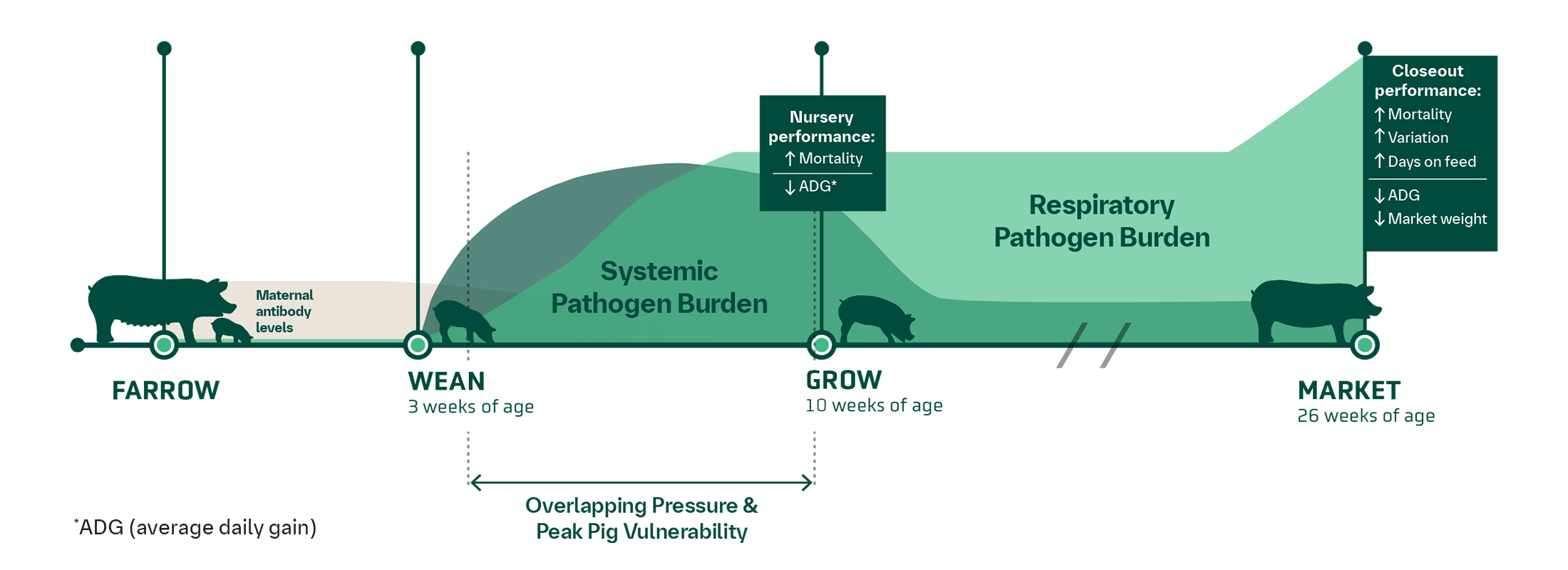
“Anything that impacts pigs during that early post-weaning period can influence their growth for the rest of their life,” explained Amanda Sponheim, DVM, key account veterinarian with Boehringer Ingelheim. “You’re not just managing a short-term issue — you’re impacting lifetime performance.”
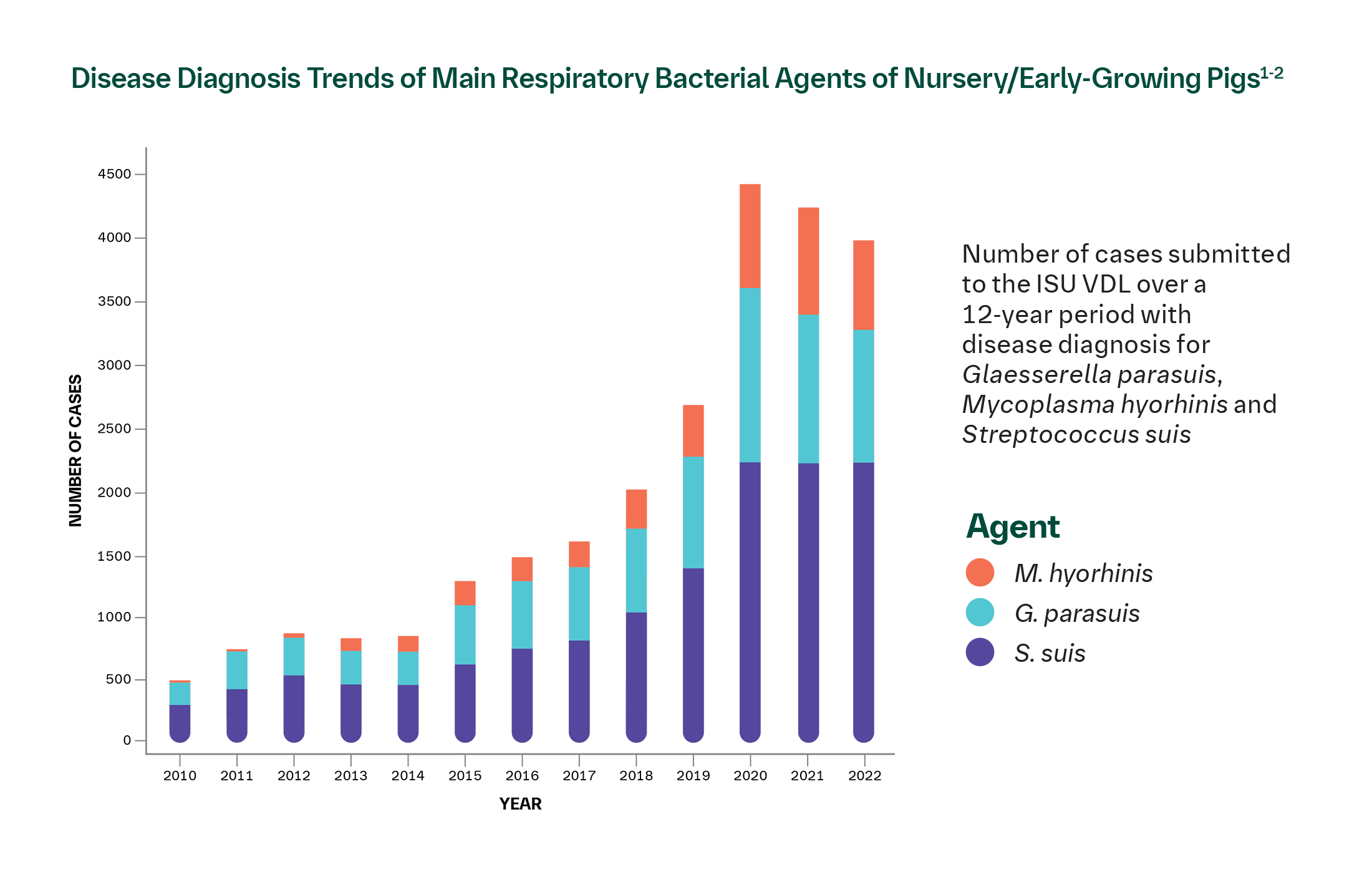
Data from the Iowa State University Veterinary Diagnostic Laboratory (ISU VDL) reinforce the scale of the challenge. Over the past decade, disease diagnoses of key nursery systemic pathogens — including G. parasuis, M. hyorhinis and Streptococcus suis — have increased substantially.1–2
What role do coinfections play?
One factor potentially causing an increase in diagnosis over the years is the role of viral coinfections — especially with porcine reproductive and respiratory syndrome virus type 2 L1C.5 (PRRSV-2).
“PRRSV-2 L1C.5 is often top-of-mind, but when you layer in endemic bacteria such as G. parasuis and M. hyorhinis, mortality can escalate,” noted Dr. Sponheim. “Viral diseases are known to be a catalyst for endemic bacterial diseases.”
Research has demonstrated a high frequency of co-detection and co-disease diagnosis with other pathogens, such as PRRSV-2 and IAV-S. Minimizing the health impact of endemic bacterial agents is critical to mitigating viral impact .2
What are the challenges in diagnosis and management?
Diagnosing and managing nursery systemic pathogens are complicated by several factors.
First, many of these bacteria are commensal organisms, meaning their presence alone does not confirm disease. Accurate diagnosis requires aligning clinical signs with targeted tissue sampling from acutely affected pigs.
“You have to match what you’re seeing clinically with what you’re identifying diagnostically,” said Dr. Sponheim. “The best samples are from acutely affected pigs that haven’t been treated with antibiotics, and tissue samples are critical.”
Timing is another challenge. Clinical signs often appear after disease has progressed, and by that point, intervention options may be limited.
Finally, disease progression can be rapid. For example, G. parasuis is often associated with sudden onset, high mortality and limited response to treatment once clinical signs are apparent.
Work closely with your veterinarian and a pathologist to help accurately track and diagnose nursery disease and adjust prevention strategies.
Why opt for prevention over treatment?
While antibiotics remain a tool for managing bacterial disease, their use is increasingly being evaluated within the context of stewardship and long-term sustainability. As a result, the industry is shifting toward prevention-focused approaches that aim to reduce overall pathogen burden before clinical disease occurs.
An effective approach to managing nursery systemic pathogens could begin before nursery pigs are even born, ensuring optimal sow health to lessen spread to piglets.
“If you are seeing problems early in the nursery, your intervention may need to happen in the sow herd,” offered Dr. Sponheim. “You need to consider the whole system, including replacement gilts.”
Key components of a comprehensive prevention strategy include:
- Early identification of clinical patterns to determine timing of intervention
- Attention to replacement gilt and sow herd health, recognizing that pathogen exposure often begins prior to weaning, with special attention to reducing comingling from multiple sources to a single source
- Biosecurity measures to reduce viral introduction and downstream bacterial amplification
- System-specific vaccination protocols that account for replacement gilts, breeding herd, and piglets
Vaccination plays a key role in reducing the impact of nursery systemic pathogens, especially vaccines targeting G. parasuis. Recognized as one of the most impactful bacterial pathogens in swine production, G. parasuis contributes to systemic disease, reduced productivity and compromised animal welfare — particularly when combined with other infections.
PARASAIL® vaccine is the first and only avirulent live, single-dose G. parasuis vaccine. Administered with a single 1-mL intramuscular injection, PARASAIL:
- Provides protection against one of the most common strains of G. parasuis in circulation: serovar Type 5.
- Provides cross-protection between serovars 4 and 5 and against 13.3
- Allows piglets to develop immunity before maternal immunity wanes to a point low enough for infection to occur.
- Helps reduce systemic pathogen burden and protect herd health.
- Has no wait time compared to autogenous vaccines. It’s ready-to-use right off the shelf.
By recognizing the collective impact of systemic pathogens like G. parasuis and M. hyorhinis, and by prioritizing prevention through vaccination and sound management, producers and veterinarians can better protect pigs when they are most vulnerable, better setting them up for a lifetime of performance.
Talk to your Boehringer Ingelheim representative about prevention options for nursery systemic disease, or click here to learn more.
References
1 Silva A, et al. Diagnostic trends of five swine endemic bacterial pathogens using data from the Iowa State University Veterinary Diagnostic Laboratory (2010–2019), in Proceedings. AASV 52nd Annu Meet 2021;15–19.
2 Silva A, Almeida M, Michael A, et al. Detection and disease diagnosis trends (2017–2022) for Streptococcus suis, Glaesserella parasuis, Mycoplasma hyorhinis, Antinobacillus suis and Mycoplasma hyosynoviae at Iowa State University Veterinary Diagnostic Laboratory. BMC Vet Res 2023;19:268.
3 Data on file. Boehringer Ingelheim Animal Health USA Inc.
PARASAIL® is a registered trademark of Boehringer Ingelheim Animal Health USA Inc. ©2026 Boehringer Ingelheim Animal Health USA Inc., Duluth, GA. All rights reserved. US-SWN-0054-2026