Pyramid Header Image

When the evidence stacks up, other vaccines don't come close.


If you’re looking to raise robust calves, look to the Boehringer Ingelheim premier vaccine families of PYRAMID® + PRESPONSE® SQ. Backed by research, their proven performance defends your herd against the primary viruses and bacteria that lead to bovine respiratory disease. By prioritizing early calf health, you set calves up for a healthier, more productive future.
Protection against BRSV in the face of maternal antibodies1

OBJECTIVE

Evaluate the efficacy of an adjuvanted modified-live virus (MLV) vaccine used in the presence of maternal antibodies against a BRSV challenge. 


FINDINGS

  • PYRAMID 5 group had significant reduction in overall percentage of BRSV lung involvement compared to controls.
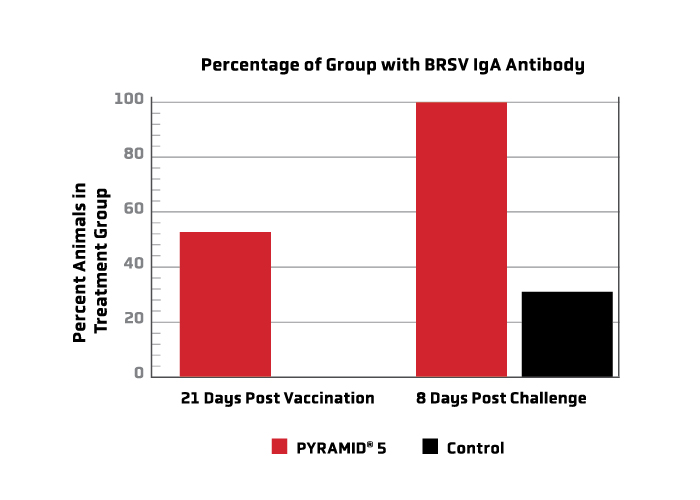
  • By eight days post challenge, all the vaccinates (17/17) were positive for the expression of IgA, while only 5/16 of the controls expressed IgA following challenge. 
  • BRSV was shed from the PYRAMID 5 group at lower levels and for fewer days as compared to the control group.
Graph

TAKE-AWAY

  • Administration of PYRAMID 5 to calves approximately 30 days of age and fed colostrum containing BRSV antibodies decreased the severity and duration of clinical signs after direct BRSV challenge.
  • Research shows that PYRAMID vaccines can stimulate IgA antibody production to boost local immunity against BRSV, a feature previously only attributed to intranasal vaccines.

Previous research: Defending against BVDV in the face of maternal antibodies2

OBJECTIVE

Determine if young calves with maternal antibodies from colostrum could be protected from a virulent BVDV Type 2 challenge seven months after vaccination with PYRAMID 5 at a young age.


TREATMENT

  • Negative Control – antibody-free colostrum supplement (milk replacer)
  • PYRAMID 5 Vaccinates – calves given colostrum from BVDV-vaccinated cows
  • Positive Control – calves given colostrum from BVDV-vaccinated cows


FINDINGS

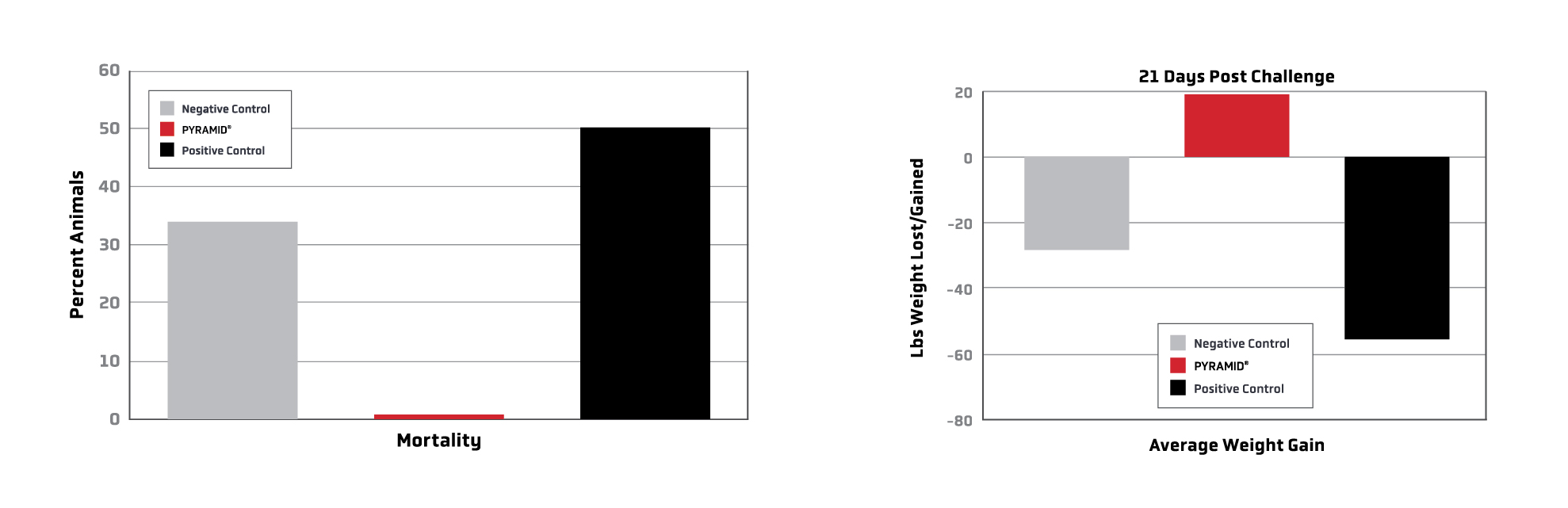
  • No PYRAMID 5 vaccinated calf died following BVD virus challenge.
  • PYRAMID 5 calves gained weight after challenge.
 

Two Graphs


TAKE-AWAY

PYRAMID 5 vaccination in one month-old calves protected against clinical disease when challenged with BVDV Type 2 seven months following vaccination.

The recent research: Stimulating the immune system with the Singer strain of BVDV3

OBJECTIVE

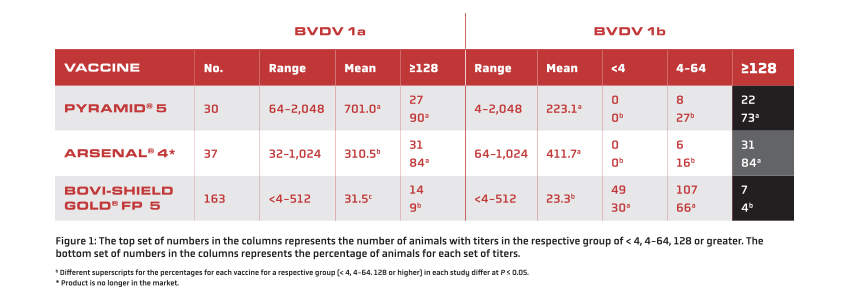
Investigate the immune response to four different subgenotypes of BVDV by measuring antibody titers produced from six commercial vaccines, including PYRAMID 5, Arsenal® 4, and Bovi-Shield GOLD® FP 5.


FINDINGS

Vaccines containing the Singer strain of BVDV demonstrated higher levels of BVDV 1a– and BVDV 1b–neutralizing antibodies than vaccines containing the NADL strain of BVDV.
 

Pyramid Chart


TAKE-AWAY

  • When evaluating BVDV vaccines, it is crucial to choose a vaccine that can robustly stimulate the immune system and has demonstrated protection against BVDV 1b, the most common strain in the U.S. cattle population4.
  • Vaccines containing the Singer strain, like PYRAMID, have demonstrated their ability to stimulate a calf’s immune response.


Field research: Stimulating BVDV immunity in the face of maternal antibodies4

OBJECTIVE

Determine the effects on health, performance and immune response of different injectable vaccine regimens administered at 62 or 188 days of age, and again at weaning in beef calves:

  • Typical preconditioning guidelines recommend calves be vaccinated at or near weaning (180 to 210 days of age) because of the assumption that maternal antibodies inactivate vaccine pathogens before this time.


FINDINGS

At both ages, when young beef calves were vaccinated with PYRAMID® 5 + PRESPONSE® SQ:

  • There was no difference in growth performance and health outcome

icon1

  • There was a proven immune response to BVDV, even in the presence of maternal antibodies

​​​​​​​icon-2

​​​​​​​

TAKE-AWAY​​​​​​​

In the presence of maternal antibodies, vaccination of calves at branding with PYRAMID 5 stimulated a cell-mediated-immunity (CMI) response to BVDV and a significant antibody response to BVDV Type 1a.

Feedlot research: Focusing on feedlot steers5

OBJECTIVE

Compare the effects of PYRAMID® 5, Bovi-Shield GOLD® FP 5 and BOVI-SHIELD GOLD IBR-BVD on performance, health and carcass quality of auction-derived steers.


FINDINGS

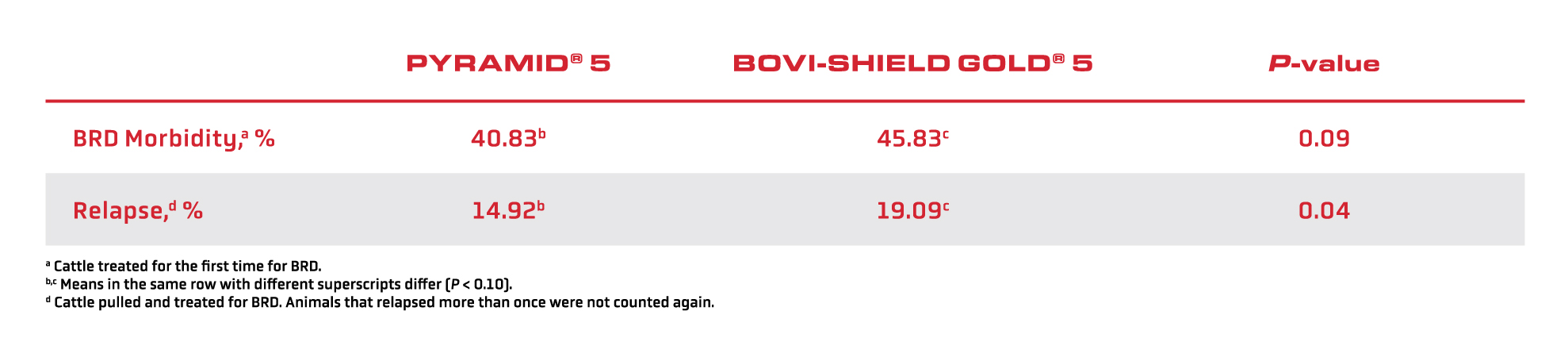
Among the 3,147 animals studied, steers receiving PYRAMID 5 had:

  • 11% LOWER BRD MORBIDITY RATE +
  • 22% LOWER RELAPSE RATE OVER BOVI-SHIELD GOLD 5
 

Pyramid chart 1


Combined treatment and railer (culling) costs were lower when compared to:

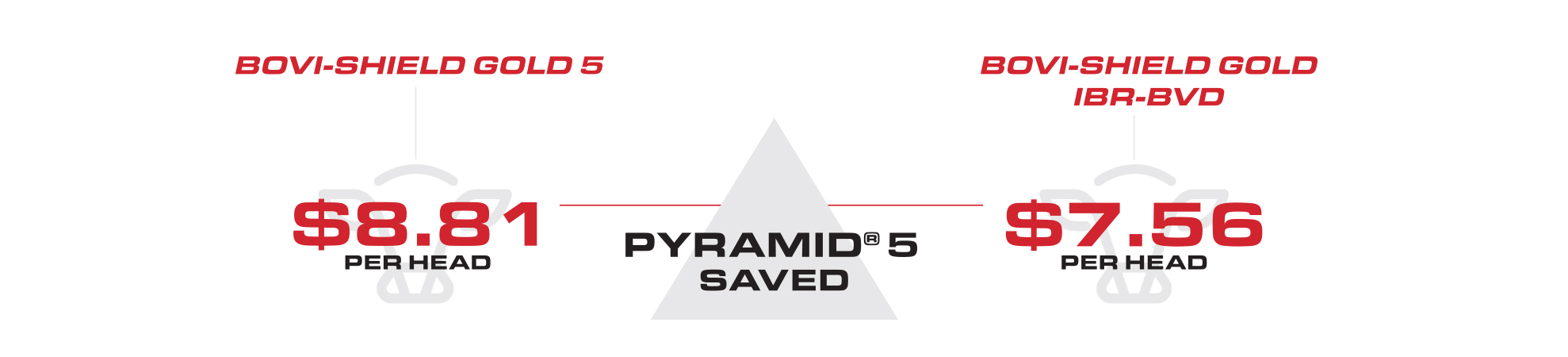
  • $8.81 less per head than Bovi-Shield Gold 5 
  • $7.56 less per head than Bovi-Shield Gold IBR-BVD


TAKE-AWAY

Compared to steers vaccinated with BOVI-SHIELD GOLD 5 or BOVI-SHIELD GOLD IBR-BVD, those vaccinated at arrival with PYRAMID 5 had improved feed conversion, lower morbidity and relapse rates due to BRD, and lower BRD-associated railer rates, for an economic advantage in treatment and railer costs.


Mannheimia research: Crunching the feedlot numbers6

OBJECTIVE

Compare the effects of administering

  1. Metaphylactic treatment with tilmicosin alone or

  2. Tilmicosin plus PRESPONSE® SQ vaccine on cattle health and economic return in a commercial feedlot setting, when given on arrival.


FINDINGS

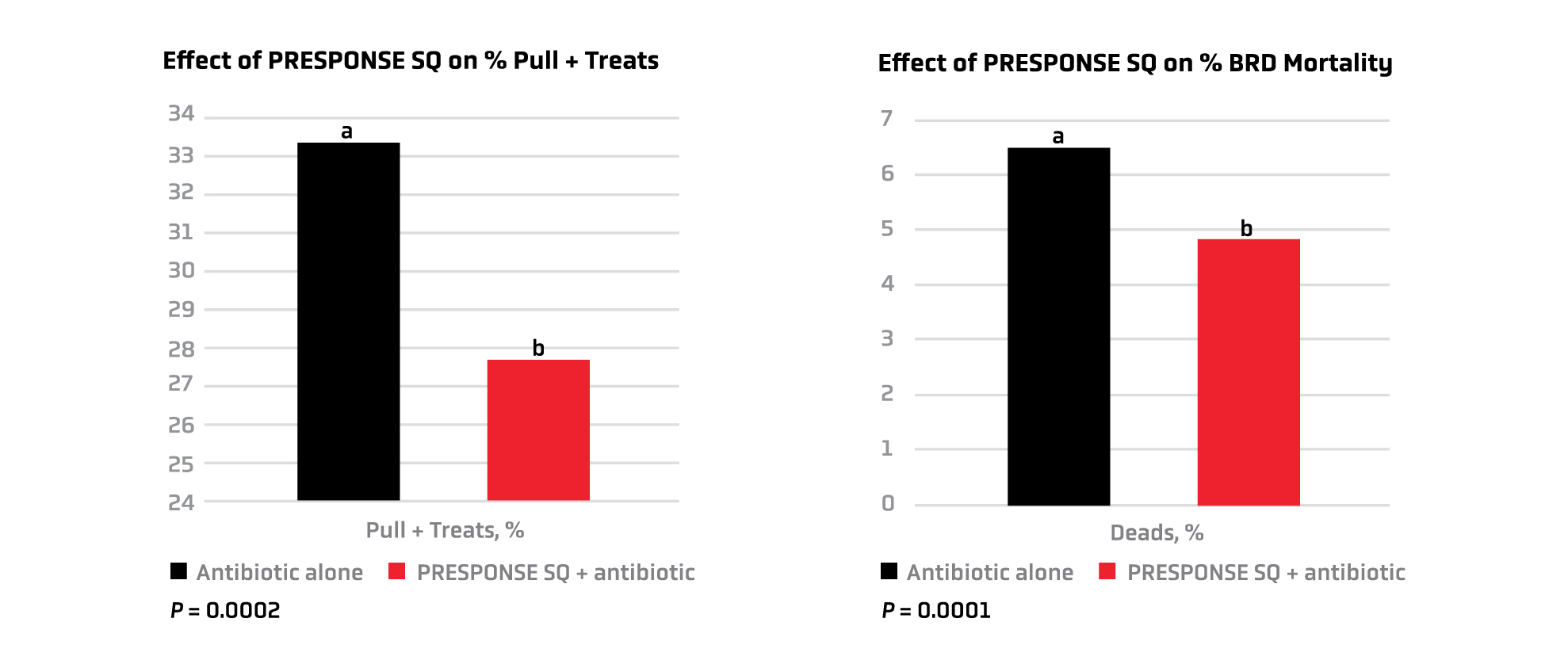
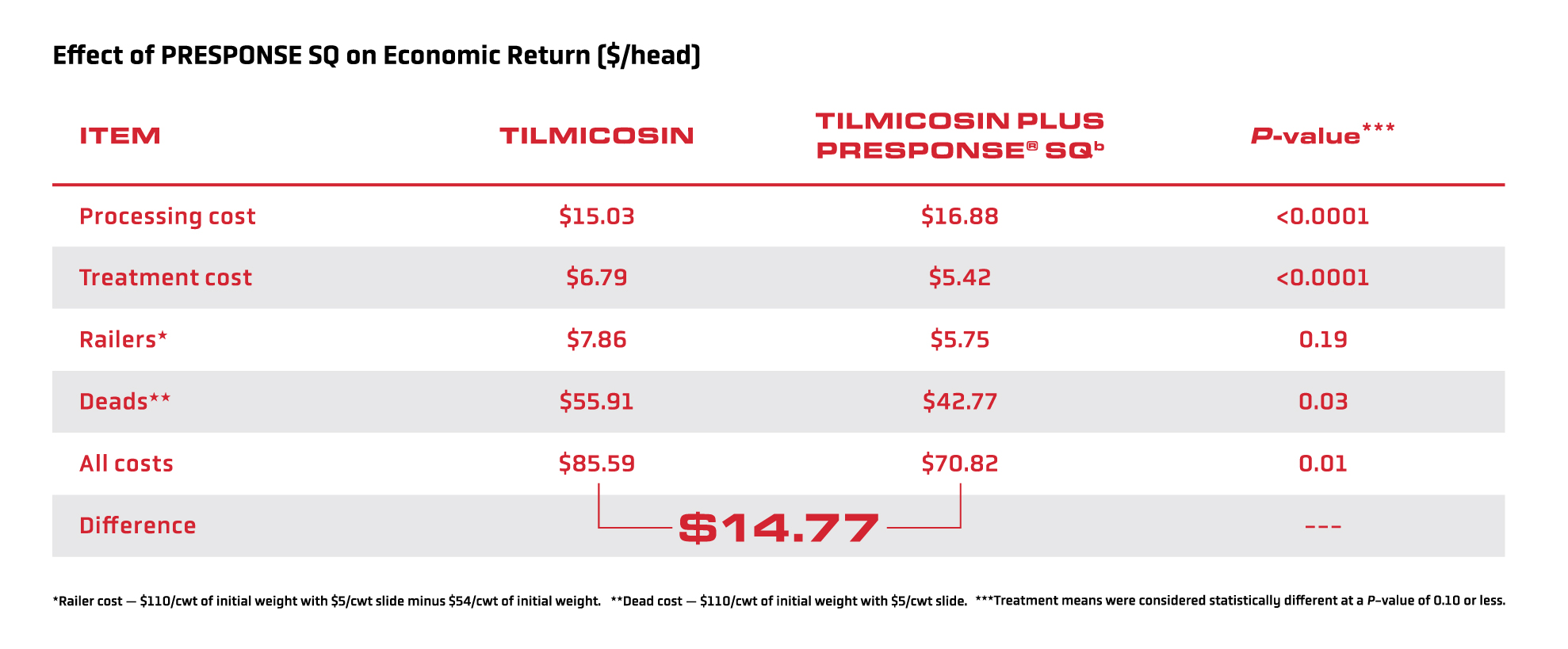
PRESPONSE SQ in combination with metaphylactic tilmicosin helped reduce BRD in high-risk steers.


Effect of tilmicosin alone or in combination with mannheimia haemolytica toxoid on morbidity, mortality and railer rates of high-risk feedlot steers (ls means).
 

Effect of Presponse SQ dual graphs


Effect of Presponse SQ on economic return


TAKE-AWAY

PRESPONSE SQ vaccine in combination with tilmicosin reduced BRD morbidity and mortality in high-risk steer calves compared to the use of tilmicosin alone.
There was a $14.77/head advantage to using PRESPONSE SQ and tilmicosin versus tilmicosin alone.

Mannheimia haemolytica produces leukotoxins to weaken calf defenses
Mannheimia haemolytica bacteria graphic

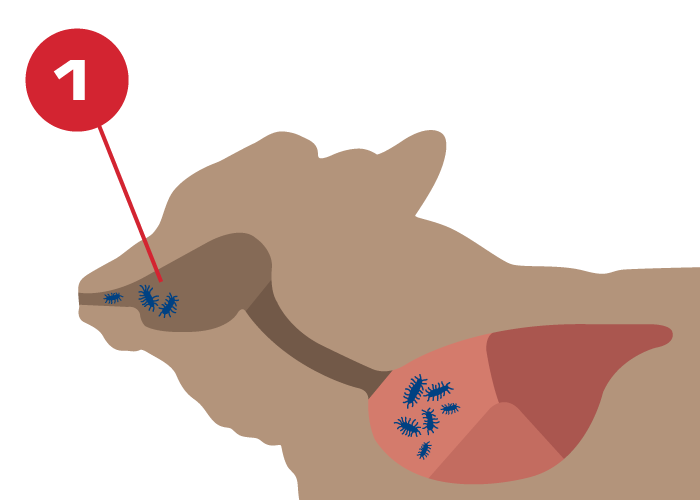
Moments after calves are born, Mannheimia haemolytica bacteria enter their nostrils and colonize the nasal passages.
Mannheimia haemolytica bacteria graphic

Moments after calves are born, Mannheimia haemolytica bacteria enter their nostrils and colonize the nasal passages.

Mannheimia haemolytica bacteria graphic 2

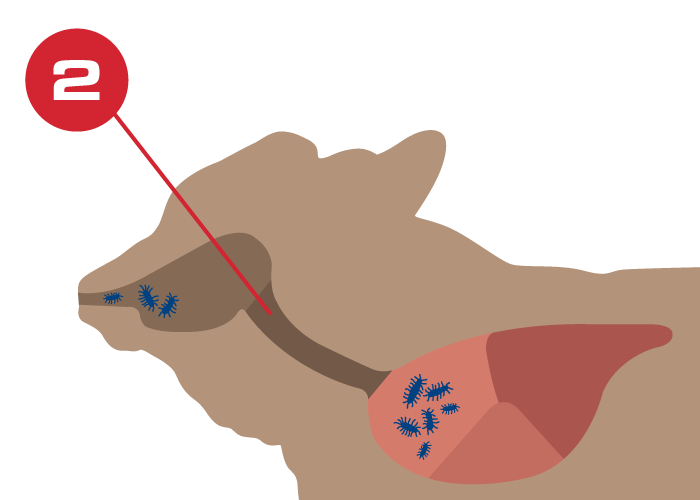
Stress and viral infection can damage the lining of the upper respiratory tract.
Mannheimia haemolytica bacteria graphic 2

Stress and viral infection can damage the lining of the upper respiratory tract.

Mannheimia haemolytica bacteria graphic 3

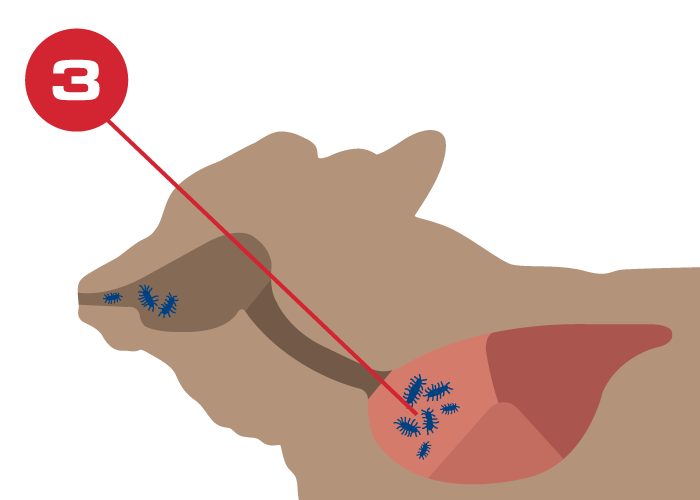
The damaged upper respiratory tract allows the bacteria to invade the lungs and multiply.
Mannheimia haemolytica bacteria graphic 3

The damaged upper respiratory tract allows the bacteria to invade the lungs and multiply.

Mannheimia haemolytica bacteria graphic

Moments after calves are born, Mannheimia haemolytica bacteria enter their nostrils and colonize the nasal passages.

Mannheimia haemolytica bacteria graphic

Moments after calves are born, Mannheimia haemolytica bacteria enter their nostrils and colonize the nasal passages.

Mannheimia haemolytica bacteria graphic 2

Stress and viral infection can damage the lining of the upper respiratory tract.

Mannheimia haemolytica bacteria graphic 2

Stress and viral infection can damage the lining of the upper respiratory tract.

Mannheimia haemolytica bacteria graphic 3

The damaged upper respiratory tract allows the bacteria to invade the lungs and multiply.

Mannheimia haemolytica bacteria graphic 3

The damaged upper respiratory tract allows the bacteria to invade the lungs and multiply.

Bacteria invasion graphic

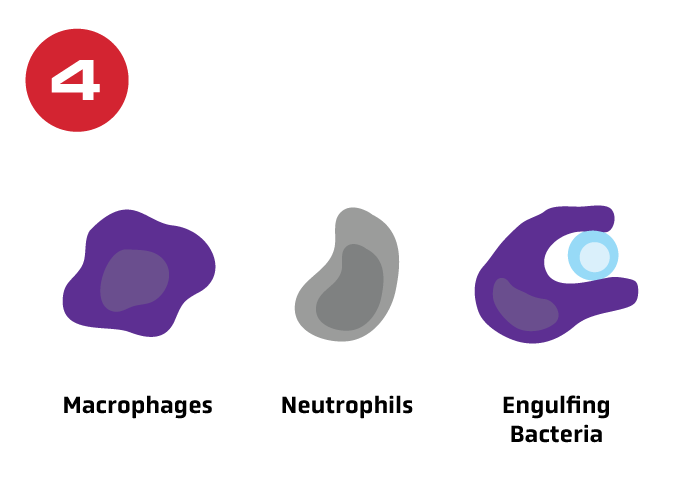
Bacterial invasion of the lungs triggers macrophages and neutrophils, which are white blood cells of the immune system, to travel to the lungs and ingest invading bacteria.
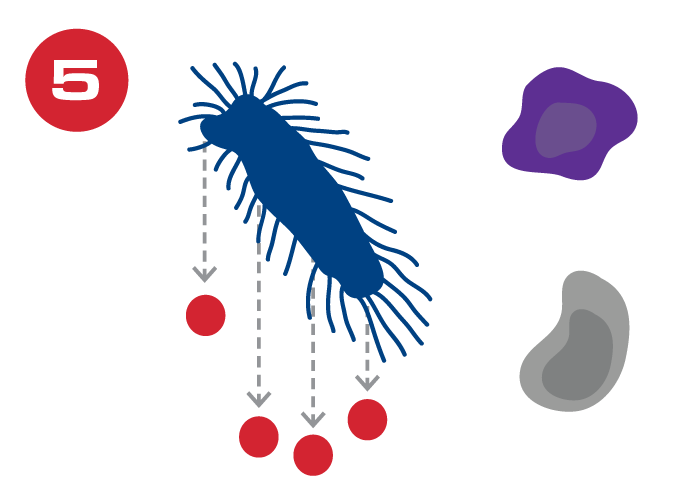
Bacteria invasion graphic

Bacterial invasion of the lungs triggers macrophages and neutrophils, which are white blood cells of the immune system, to travel to the lungs and ingest invading bacteria.

M. haemolytica organisms graphic

Rapidly growing M. haemolytica organisms produce a leukotoxin, which functionally impairs and kills macrophages and neutrophils.
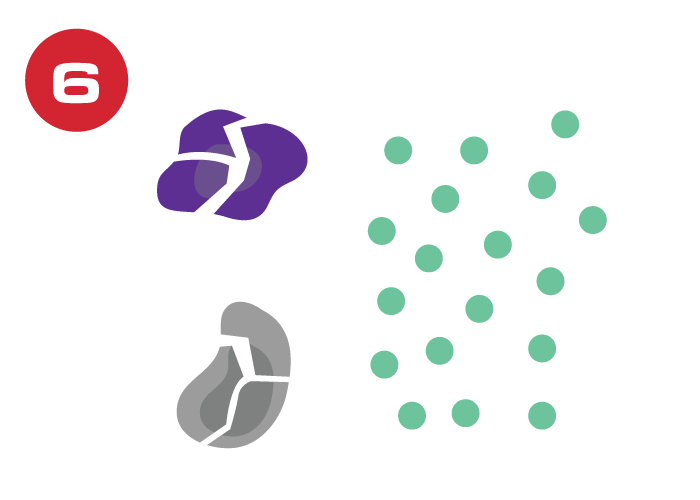
M. haemolytica organisms graphic

Rapidly growing M. haemolytica organisms produce a leukotoxin, which functionally impairs and kills macrophages and neutrophils.

enzymes graphic

Dying macrophages and neutrophils release enzymes, resulting in lung tissue destruction and fibrinous pneumonia.

enzymes graphic

Dying macrophages and neutrophils release enzymes, resulting in lung tissue destruction and fibrinous pneumonia.

Bacteria invasion graphic

Bacterial invasion of the lungs triggers macrophages and neutrophils, which are white blood cells of the immune system, to travel to the lungs and ingest invading bacteria.

Bacteria invasion graphic

Bacterial invasion of the lungs triggers macrophages and neutrophils, which are white blood cells of the immune system, to travel to the lungs and ingest invading bacteria.

M. haemolytica organisms graphic

Rapidly growing M. haemolytica organisms produce a leukotoxin, which functionally impairs and kills macrophages and neutrophils.

M. haemolytica organisms graphic

Rapidly growing M. haemolytica organisms produce a leukotoxin, which functionally impairs and kills macrophages and neutrophils.

enzymes graphic

Dying macrophages and neutrophils release enzymes, resulting in lung tissue destruction and fibrinous pneumonia.

enzymes graphic

Dying macrophages and neutrophils release enzymes, resulting in lung tissue destruction and fibrinous pneumonia.

Why many respiratory vaccines fail
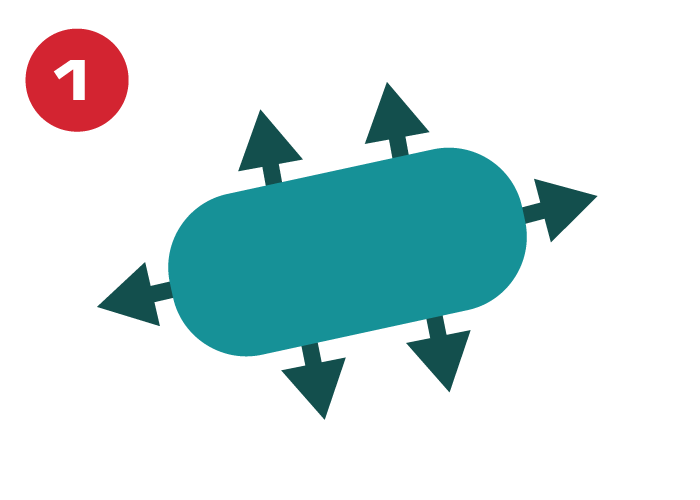
bacterins graphic

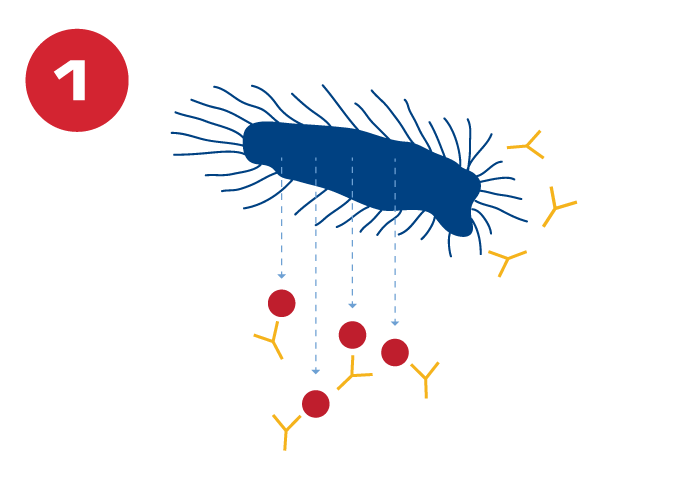
Bacterins, which are killed or attenuated bacteria used in a vaccine, contain bacterial surface antigens that are unique to those bacteria.
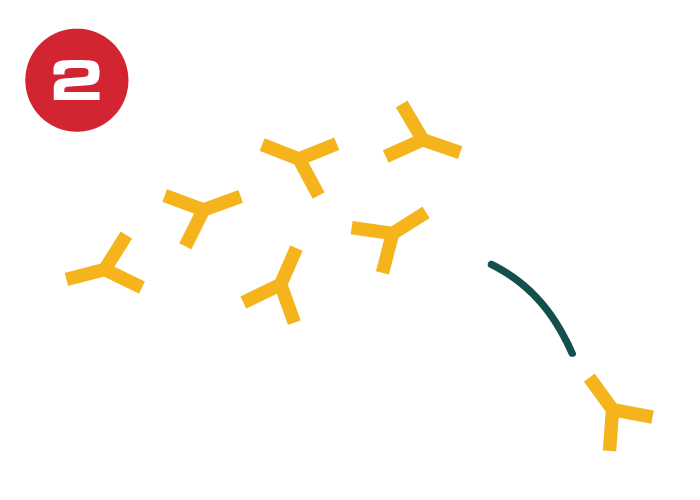
bacterins graphic

Bacterins, which are killed or attenuated bacteria used in a vaccine, contain bacterial surface antigens that are unique to those bacteria.

surface antigens graphic

These surface antigens are designed to stimulate the body to produce antibodies against them.
surface antigens graphic

These surface antigens are designed to stimulate the body to produce antibodies against them.

surface antigen and bacteria graphic

When infection occurs, the antibody will recognize the surface antigen on the bacteria, bind to it and destroy the bacteria.
surface antigen and bacteria graphic

When infection occurs, the antibody will recognize the surface antigen on the bacteria, bind to it and destroy the bacteria.

bacterins graphic

Bacterins, which are killed or attenuated bacteria used in a vaccine, contain bacterial surface antigens that are unique to those bacteria.

bacterins graphic

Bacterins, which are killed or attenuated bacteria used in a vaccine, contain bacterial surface antigens that are unique to those bacteria.

surface antigens graphic

These surface antigens are designed to stimulate the body to produce antibodies against them.

surface antigens graphic

These surface antigens are designed to stimulate the body to produce antibodies against them.

surface antigen and bacteria graphic

When infection occurs, the antibody will recognize the surface antigen on the bacteria, bind to it and destroy the bacteria.

surface antigen and bacteria graphic

When infection occurs, the antibody will recognize the surface antigen on the bacteria, bind to it and destroy the bacteria.

Macrophages grahpic

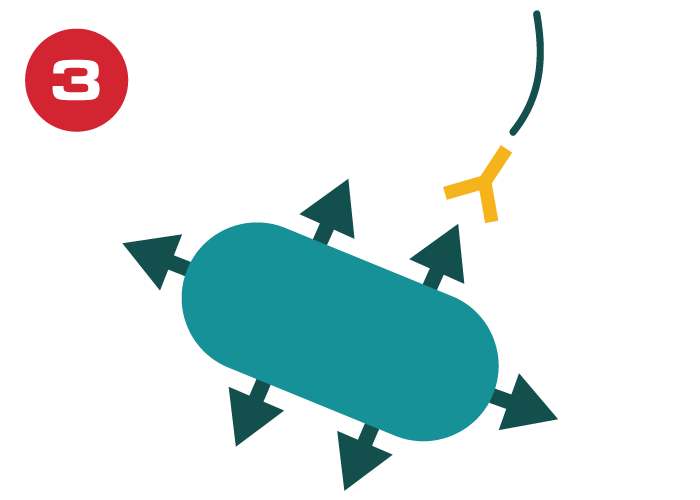
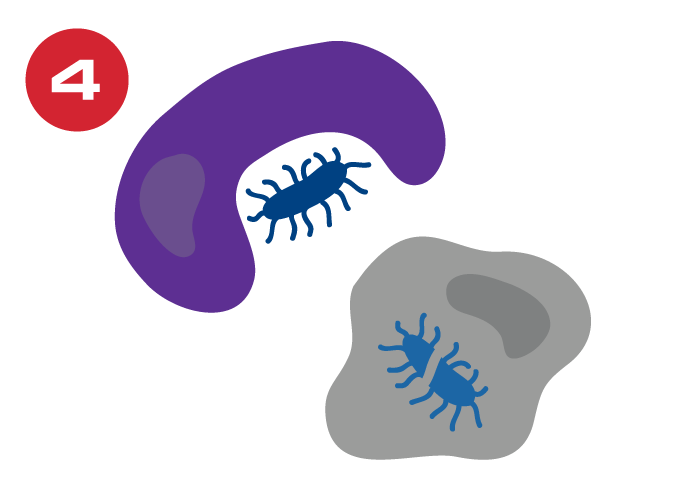
Macrophages and neutrophils then ingest the bacteria.
Macrophages grahpic

Macrophages and neutrophils then ingest the bacteria.

bacterins graphic

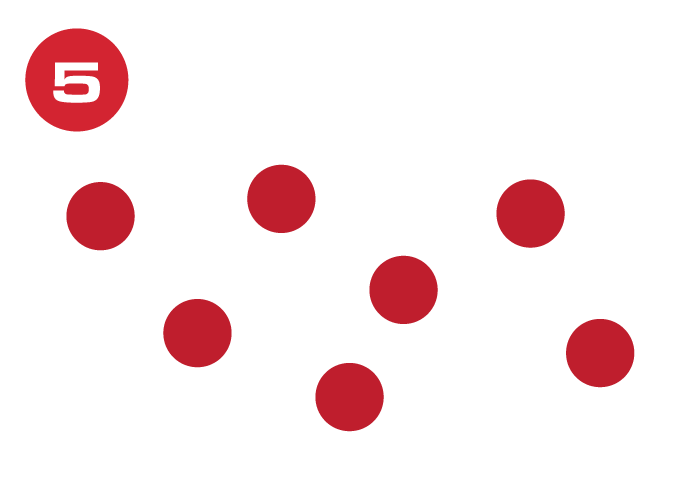
However, bacterins do not always contain leukotoxoids, substances that induce the production of leukotoxin-neutralizing antibodies. As a result, the bacterin may not protect the animal from the damage caused by leukotoxins.

bacterins graphic

However, bacterins do not always contain leukotoxoids, substances that induce the production of leukotoxin-neutralizing antibodies. As a result, the bacterin may not protect the animal from the damage caused by leukotoxins.

Macrophages grahpic

Macrophages and neutrophils then ingest the bacteria.

Macrophages grahpic

Macrophages and neutrophils then ingest the bacteria.

bacterins graphic

However, bacterins do not always contain leukotoxoids, substances that induce the production of leukotoxin-neutralizing antibodies. As a result, the bacterin may not protect the animal from the damage caused by leukotoxins.

bacterins graphic

However, bacterins do not always contain leukotoxoids, substances that induce the production of leukotoxin-neutralizing antibodies. As a result, the bacterin may not protect the animal from the damage caused by leukotoxins.

Leukotoxoids to the rescue
Leukotoxoids graphic

PRESPONSE SQ vaccine contains both bacterial surface antigens and leukotoxoids. This means that antibodies are produced that bind to the bacterial surface antigens on M. haemolytica.
Leukotoxoids graphic

PRESPONSE SQ vaccine contains both bacterial surface antigens and leukotoxoids. This means that antibodies are produced that bind to the bacterial surface antigens on M. haemolytica.

Leukotoxoids graphic 2

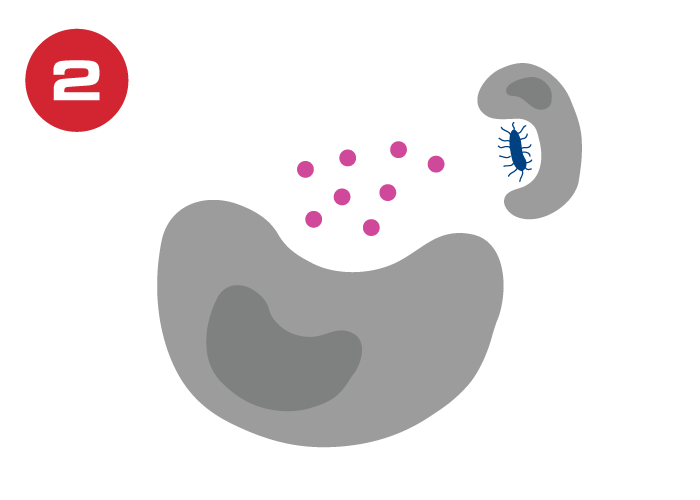
The leukotoxoids stimulate the immune system to produce anti-leukotoxin antibodies, which neutralize the destructive action of leukotoxins.
Leukotoxoids graphic 2

The leukotoxoids stimulate the immune system to produce anti-leukotoxin antibodies, which neutralize the destructive action of leukotoxins.

Leukotoxoids graphic 3

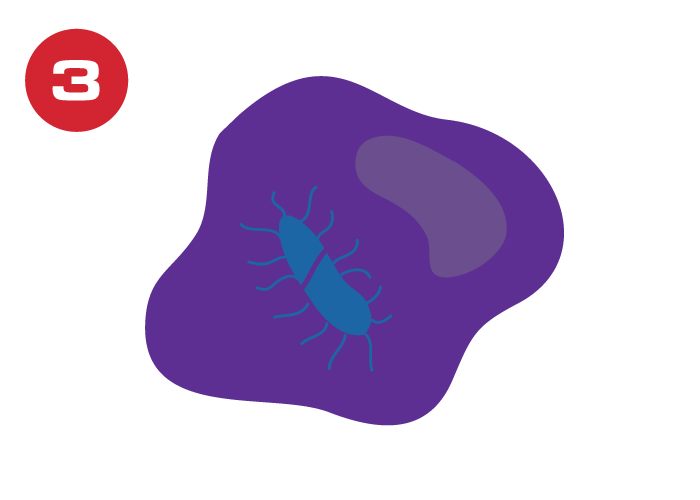
This allows intact macrophages to ingest and destroy M. haemolytica organisms, minimizing lung damage. PRESPONSE SQ vaccine also contains no whole cells or cellular debris that can cause adverse reactions.

Leukotoxoids graphic 3

This allows intact macrophages to ingest and destroy M. haemolytica organisms, minimizing lung damage. PRESPONSE SQ vaccine also contains no whole cells or cellular debris that can cause adverse reactions.

Leukotoxoids graphic

PRESPONSE SQ vaccine contains both bacterial surface antigens and leukotoxoids. This means that antibodies are produced that bind to the bacterial surface antigens on M. haemolytica.

Leukotoxoids graphic

PRESPONSE SQ vaccine contains both bacterial surface antigens and leukotoxoids. This means that antibodies are produced that bind to the bacterial surface antigens on M. haemolytica.

Leukotoxoids graphic 2

The leukotoxoids stimulate the immune system to produce anti-leukotoxin antibodies, which neutralize the destructive action of leukotoxins.

Leukotoxoids graphic 2

The leukotoxoids stimulate the immune system to produce anti-leukotoxin antibodies, which neutralize the destructive action of leukotoxins.

Leukotoxoids graphic 3

This allows intact macrophages to ingest and destroy M. haemolytica organisms, minimizing lung damage. PRESPONSE SQ vaccine also contains no whole cells or cellular debris that can cause adverse reactions.

Leukotoxoids graphic 3

This allows intact macrophages to ingest and destroy M. haemolytica organisms, minimizing lung damage. PRESPONSE SQ vaccine also contains no whole cells or cellular debris that can cause adverse reactions.

3 Pyramid Products

Relentless Protection runs in the family

Every herd could benefit from premier vaccine performance.

Relentless Protection runs in the family

Every herd could benefit from premier vaccine performance.

3 Pyramid Products

References

1 Kolb EA, Buterbaugh RE, Rinehart CL, et al. Protection against bovine respiratory syncytial virus in calves vaccinated with adjuvanted modified-live virus vaccine administered in the face of maternal antibody. Vaccine 2020;38(2):298–308.

2 Zimmerman AD, Buterbaugh RE, Schnackel JA, Chase CCL. Efficacy of a modified-live virus vaccine administered to calves with maternal antibodies and challenged seven months later with a virulent bovine viral diarrhea Type 2 virus. Bov Pract 2009;43(1):35–43.

3 Fulton RW, Cook BJ, Payton ME, et al. Immune response to bovine viral diarrhea virus (BVDV) vaccines detecting antibodies to BVDV subtypes 1a, 1b, 2a and 2c. Vaccine 2020;38(24):4032–4037.

4 Powell JG, Richeson JT, Kegley EB, et al. Immunologic, health and growth responses of beef calves administered pentavalent modified-live virus respiratory vaccine in the presence of maternal antibody versus a traditional vaccination regimen. Bov Pract 2012;46(2)122–130.

5 Bryant TC, Rogers KC, Stone ND, Miles DG. Effect of viral respiratory vaccine treatment on performance, health and carcass traits of auction-origin feeder steers. Bov Pract 2008;42(1):98–103.

6 Bryant TC, Nichols JR, Farmer TD, Miles DG. Effect of tilmicosin alone or in combination with Mannheimia haemolytica toxoid administered at initial feedlot processing on morbidity and mortality of high-risk calves. Bov Pract 2008:42(1):50–55.

Trademarks

PYRAMID®, the PYRAMID logo® and PRESPONSE® are registered trademarks of Boehringer Ingelheim Animal Health USA Inc. All other trademarks are the property of their respective owner.

©2025 Boehringer Ingelheim Animal Health USA Inc., Duluth, GA. All rights reserved.

US-RUM-0053-2025