Now approved to support dogs earlier

VETMEDIN® (pimobendan) helps treat heart disease as early as Stage B2 preclinical mixomatous mitral valve disease (MMVD)

Learn more about this claim

man playing ball in grass with small dog
Man with dog

VETMEDIN® (pimobendan)

The only treatment approved by the FDA for dogs starting at Stage B2 pre-clinical myxomatous mitral valve disease (MMVD) and throughout the clinical stages of congestive heart failure (CHF) due to MMVD, or CHF due to dilated cardiomyopathy (DCM).


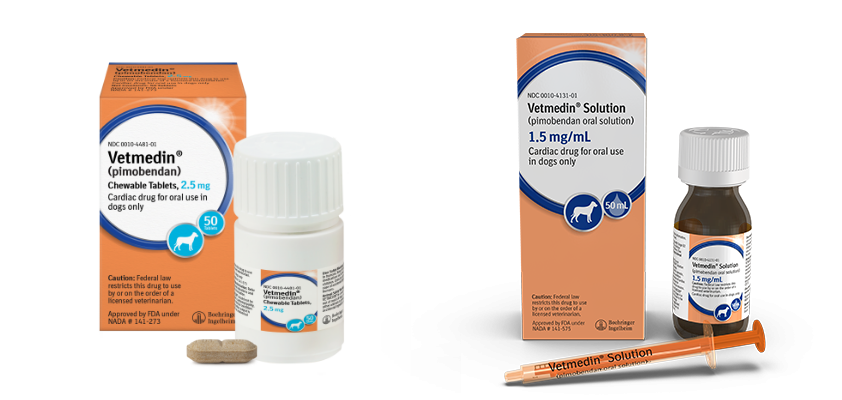
Available as chewable tablets or an oral solution.

Support for dogs throughout the MMVD journey and for dogs with clinical DCM

Backed by more than 25 years of clinical experience and ongoing scientific contribution to canine cardiology, VETMEDIN® continues to support veterinarians with trusted therapy, dedicated veterinary support teams, educational resources and services designed to help practices and pet owners navigate long-term cardiac care with confidence.


A published study demonstrates that when started at Stage B2, VETMEDIN® delays the onset of CHF due to MMVD by up to an average of 15.6 months when compared to dogs treated with a placebo.1


When started or continued at the first signs of CHF due to MMVD, studies have demonstrated that VETMEDIN can increase survival time and improve quality of life for stage C&D CHF Patients.2,3


Additionally, pimobendan can improve clinical signs and prolong survival in dogs with CHF due to dilated cardiomyopathy.4

Available in two convenient formulations:


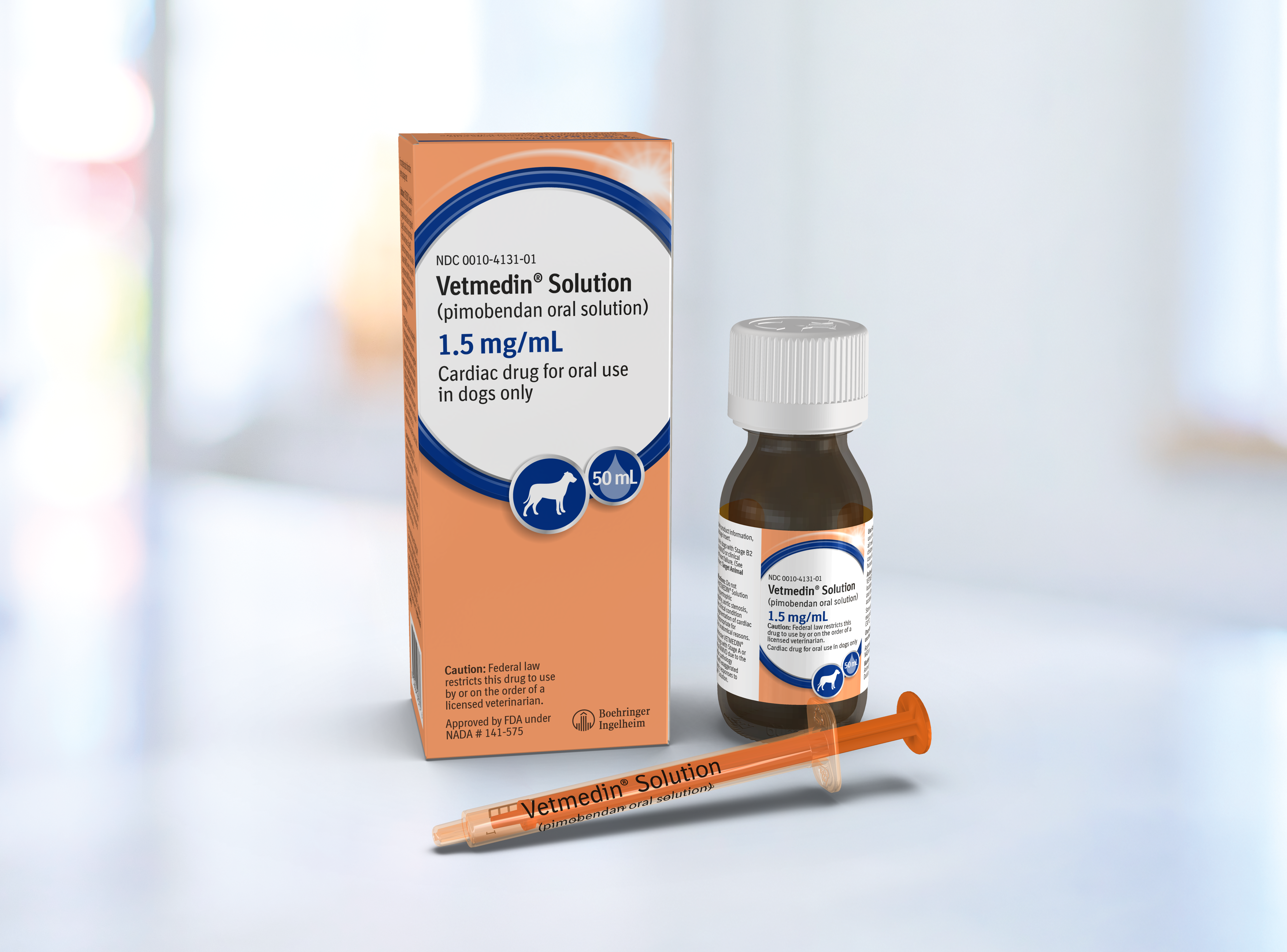
Vetmedin Solution box, bottle and syringe


VETMEDIN® Solution (pimobendan oral solution)

  • The only oral solution product approved by the FDA for managing both preclinical and clinical MMVD as well as clinical DCM in dogs.
  • Flavorless solution makes administration easy for dogs who prefer liquid medication.


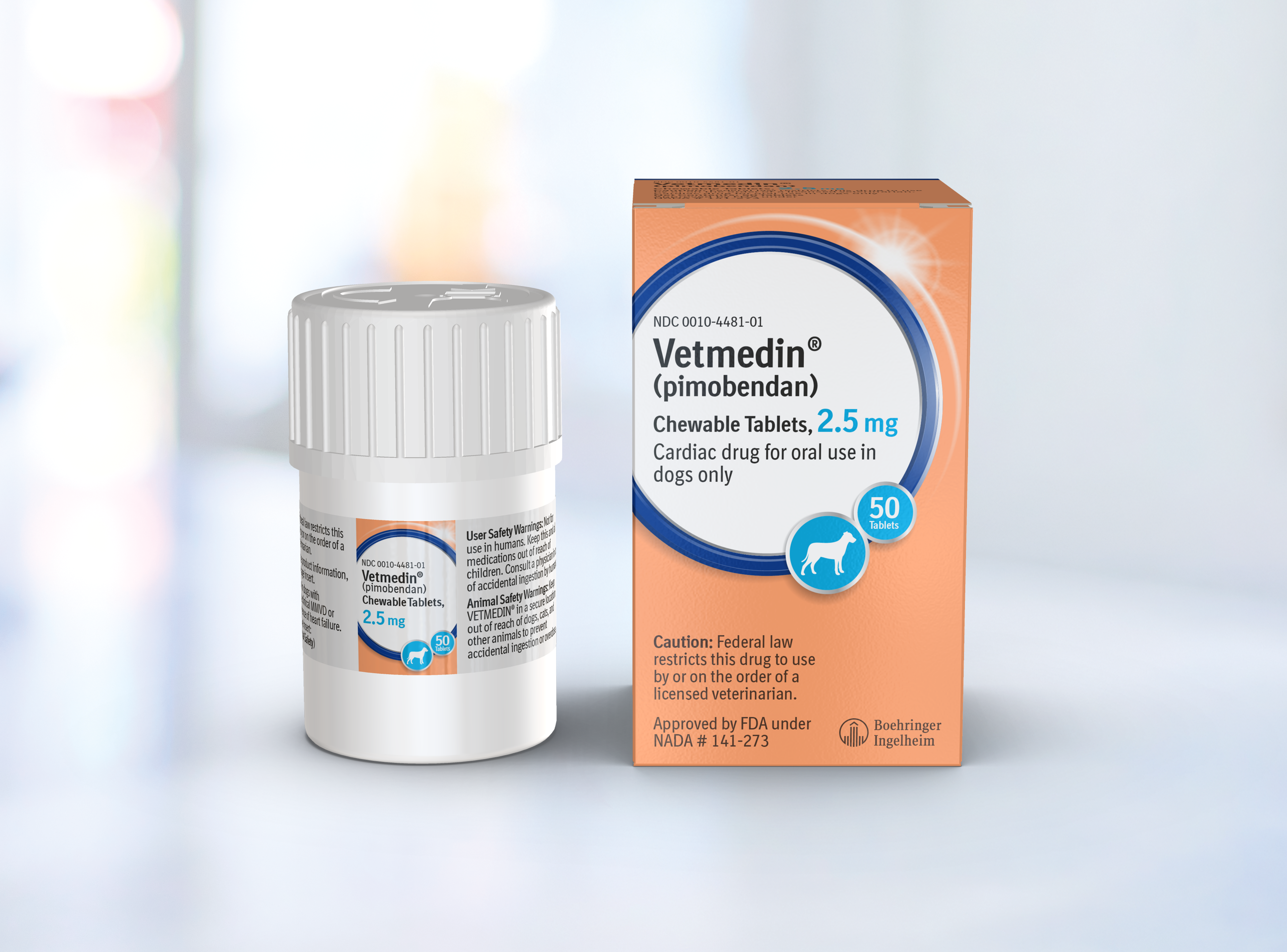
Vetmedin box, bottle, and chewable on counter


VETMEDIN® (pimobendan) Chewable Tablets

  • Beef-flavored chewable tablets are half-scored to meet the dosing needs of patients who prefer chews.

Checkmark in a circle

Approved by
 the FDA
The only brand approved by the FDA that includes both tablet and liquid formulations to manage dogs starting at Stage B2 preclinical and through CHF of MMVD; and also for dogs in CHF due to DCM.

Checkmark in a circle

Approved by
 the FDA
The only brand approved by the FDA that includes both tablet and liquid formulations to manage dogs starting at Stage B2 preclinical and through CHF of MMVD; and also for dogs in CHF due to DCM.

cartoon timer icon in a circle

Dual
 Mode of Action

Studies show that increased survival time and improved quality of life compared to an ACE inhibitor may be attributed to a dual mode of action. 2, 3, 5

cartoon timer icon in a circle

Dual
 Mode of Action

Studies show that increased survival time and improved quality of life compared to an ACE inhibitor may be attributed to a dual mode of action. 2, 3, 5

Cartoon heart in a circle

ACVIM-Consensus
 Recommended
American College of Veterinary Internal Medicine (ACVIM) consensus guidelines recommend as a first-line therapy for dogs in heart failure due to MMVD or DCM.*6

Cartoon heart in a circle

ACVIM-Consensus
 Recommended
American College of Veterinary Internal Medicine (ACVIM) consensus guidelines recommend as a first-line therapy for dogs in heart failure due to MMVD or DCM.*6

Checkmark in a circle

Approved by
 the FDA
The only brand approved by the FDA that includes both tablet and liquid formulations to manage dogs starting at Stage B2 preclinical and through CHF of MMVD; and also for dogs in CHF due to DCM.

Checkmark in a circle

Approved by
 the FDA
The only brand approved by the FDA that includes both tablet and liquid formulations to manage dogs starting at Stage B2 preclinical and through CHF of MMVD; and also for dogs in CHF due to DCM.

cartoon timer icon in a circle

Dual
 Mode of Action

Studies show that increased survival time and improved quality of life compared to an ACE inhibitor may be attributed to a dual mode of action. 2, 3, 5

cartoon timer icon in a circle

Dual
 Mode of Action

Studies show that increased survival time and improved quality of life compared to an ACE inhibitor may be attributed to a dual mode of action. 2, 3, 5

Cartoon heart in a circle

ACVIM-Consensus
 Recommended
American College of Veterinary Internal Medicine (ACVIM) consensus guidelines recommend as a first-line therapy for dogs in heart failure due to MMVD or DCM.*6

Cartoon heart in a circle

ACVIM-Consensus
 Recommended
American College of Veterinary Internal Medicine (ACVIM) consensus guidelines recommend as a first-line therapy for dogs in heart failure due to MMVD or DCM.*6

*VETMEDIN (pimobendan) should not be administered in cases of hypertrophic cardiomyopathy, aortic stenosis, or any other clinical condition where an augmentation of cardiac output is inappropriate for functional or anatomical reasons.

VETMEDIN® (pimobendan) For Your Canine Patients

Click below to order VETMEDIN Chewable Tablets or VETMEDIN Solution on CONNECT.

Download

Select All

Download

VETMEDIN® (pimobendan) Chewable Tablets and VETMEDIN® Solution (pimobendan oral solution) 

INDICATIONS

VETMEDIN® (pimobendan) is indicated for the delay of onset of congestive heart failure in dogs with Stage B2 preclinical myxomatous mitral valve disease. Stage B2 preclinical myxomatous mitral valve disease (MMVD) refers to dogs with asymptomatic MMVD with cardiomegaly that have a moderate or loud mitral murmur due to mitral regurgitation and cardiomegaly.


VETMEDIN® (pimobendan) is indicated for the management of the signs of mild, moderate, or severe congestive heart failure (CHF) in dogs due to clinical MMVD or dilated cardiomyopathy (DCM). VETMEDIN is indicated for use with concurrent therapy for congestive heart failure (e.g., furosemide, etc.) as appropriate on a case-by-case basis.

CLINICAL BENEFITS

VETMEDIN® Brand Products feature a mode of action that acts as both a positive inotrope and potent, balanced vasodilator, simultaneously dilating veins and arteries. In these forms, the product enters the GI tract and is rapidly absorbed.


  • Proprietary formulations ensures optimal bioavailability that in turn ensures optimal therapeutic effect.
     
  • In a study, dogs diagnosed with Stage B2 MMVD that were treated with VETMEDIN demonstrated an average of up to 15.6 months of prolonged, symptom-free life compared to dogs treated with a placebo.
     
  • In clinical studies in dogs in CHF, the dual mode of action demonstrated increased survival time and improved quality of life compared to ACE inhibitors.2, 3
     
  • Published evidence shows improved clinical parameters and reduced heart size when compared to dogs with CHF on ACE inhibitors.5
     
  • Recommended by American College of Veterinary Internal Medicine (ACVIM) Specialty of Cardiology consensus panel guidelines as part of first-line therapy in dogs diagnosed with heart failure to ensure optimal patient outcomes.6
     
  • The ACVIM recommends pimobendan, the active ingredient in VETMEDIN, for the treatment of dogs with Stage B2 MMVD.6
     
  • The beef-flavored chewable tablet ensures high levels of acceptability that in turn promotes compliance.8, 9
     
  • The oral solution formulation makes it easy to give dogs who prefer liquid medication.
     
  • Meets FDA standards of product efficacy, stability, and strength.
DOSAGE & ADMINISTRATION

VETMEDIN® (pimobendan) Chewable Tablets


VETMEDIN Chewable Tablets should be administered orally at a total daily dose of 0.23mg/lb (0.5 mg/kg) body weight.


  • The total daily dose should be divided into 2 portions that are not necessarily equal, and the portions should be administered approximately 12 hours apart (ie, morning and evening).    
     
  • Any suitable combination of whole or half tablets may be used.    
     
  • The tablets are scored, and the calculated dosage should be provided to the nearest half-tablet increment.    

    See the VETMEDIN Chewable Tablets Dosing Chart


VETMEDIN® Solution (pimobendan oral solution)


VETMEDIN Solution should be administered orally at a total daily dose of 0.23 mg/lb (0.5 mg/kg) body weight.


  • The total daily dose should be divided into 2 equal portions administered approximately 12 hours apart (i.e., morning and evening).          
     
  • VETMEDIN Solution should be administered directly into the mouth. Do not mix into food.          
     
  • VETMEDIN Solution should be administered using the orange dosing syringe provided in the package. The syringe is calibrated to deliver the appropriate morning or evening dose when drawn to the dog’s nearest weight in pounds.          
     
  • Do not shake the bottle before or during use to avoid foaming.    

    See the VETMEDIN Solution Dosing Chart  


SAFETY

Contraindications: Do not administer VETMEDIN in cases of hypertrophic cardiomyopathy, aortic stenosis, or any other clinical condition where an augmentation of cardiac output is inappropriate for functional or anatomical reasons.

Do not administer VETMEDIN to dogs with Stage A or B1 preclinical MMVD due to the risk of cardiac pathology associated with exaggerated hemodynamic responses to VETMEDIN.


Warnings: Only for use in dogs with Stage B2 preclinical Myxolmatous Mitral Valve Disease (MMVD) or clinical evidence of Congestive Heart Failure (CHF) due to MMVD or Dilated Cardiomyopathy (DCM). At 3 and 5 times the recommended dosage, administered over a 6-month period of time, pimobendan caused an exaggerated hemodynamic response in the normal dog heart, which was associated with cardiac pathology. Keep VETMEDIN in a secure location out of reach of dogs, cats, and other animals to prevent accidental ingestion or overdose.


Human Warnings: Not for use in humans. Keep this and all medications out of reach of children. Consult a physician in case of accidental ingestion by humans.


Precautions: The safety of VETMEDIN has not been established in dogs with asymptomatic heart disease or in heart failure caused by etiologies other than myxomatous mitral valve disease (MMVD) or dilated cardiomyopathy (DCM). The safe use of VETMEDIN has not been evaluated in dogs younger than 6 months of age, dogs with congenital heart defects, dogs with diabetes mellitus or other serious metabolic diseases, dogs used for breeding, or pregnant or lactating bitches.


Adverse Reactions: The most common side effects reported in field studies were poor appetite, lethargy, diarrhea, dyspnea, azotemia, weakness, and ataxia. 


For more information, please see full prescribing information for Solution, or full prescribing information for Chewable Tablets.

Give your Stage B2 Preclinical MMVD and your Stage C&D CHF Patients more life to love

  • VETMEDIN products have a dual mode of action, relaxing the blood vessels carrying blood to and from the heart, and improving heart muscle contractility to help the heart work more efficiently.


  • In a clinical study, dogs treated with VETMEDIN in preclinical Stage B2 demonstrated an average of up to 15.6 months of prolonged, symptom-free life compared to dogs treated with a placebo.1


  • In a clinical study, dogs in CHF due to MMVD treated with VETMEDIN products at the onset of clinical signs survived almost twice as long from the start of treatment as those treated with an ACE inhibitor.3


  • Dogs treated with VETMEDIN products from the onset of clinical signs of CHF also required less therapy to maintain quality of life as those treated with an ACE inhibitor.5
A happy white dog smiles at you

Catch It Early,
 Make a Difference

Heart disease is common—10% of dogs that are presented in primary care will be diagnosed with heart disease in their lifetime.4,7 Early intervention can help patients delay the onset of symptoms if diagnosed in the preclinical Stage B2 of MMVD or extend survival time, with a better quality of life, if treated early in Stage C CHF due to MMVD or DCM.1-4


Stage B2 Preclinical:
According to the 2019 American College of Veterinary Internal Medicine (ACVIM) consensus guidelines, Stage B2 MMVD refers to asymptomatic dogs that have more advanced cardiac remodeling that meet clinical trial criteria used to identify dogs that should benefit from initiating treatment to delay the onset of heart failure.6


The ACVIM consensus statement recommends the following diagnostic criteria to confirm Stage B2 MMVD:6

  • Murmur intensity ≥3/6
  • Echocardiographic left atrium/aorta ratio (LA/Ao ratio) in the right-sided short axis view in early diastole ≥1.6
  • Left ventricular internal diameter in diastole, normalized for body weight (LVIDDN) ≥1.7
  • Breed-adjusted radiographic vertebral heart score (VHS) >10.5


If only radiographic examination is possible, cardiomegaly may be diagnosed in cases where the VHS ≥11.5 and the vertebral left atrial size (VLAS) ≥3.0.6, 7 If radiographic cardiomegaly does not meet both of these criteria, an echocardiogram should be performed prior to the initiation of therapy.6


Signs and Symptoms of Congestive Heart Failure: 
The ACVIM recommends looking for the following clinical signs and symptoms.6, 10

  • Tachypnea
  • Restlessness
  • Respiratory distress
  • Persistent cough
  • Reluctance to exercise or play
  • Lack of stamina
  • Ascites
A happy white dog smiles at you
Image of a heart with MMVD.

Common Acquired Heart Conditions

Myxomatous Mitral Valve Disease


  • A heart condition where the degeneration of the mitral valve prevents closure of the valve leaflets, allowing blood to leak back into the left atrium.
  • A common type of chronic valvular heart disease (CVHD), MMVD accounts for roughly 75% of canine heart diseases.2, 11
  • Canine MMVD primarily affects older, small to medium size dogs, although any dog can be affected. Common at-risk breeds include: Cavalier King Charles Spaniel, Pekingese, Pomeranian, Miniature Pinscher, Boston Terrier, Miniature Poodle, Toy Poodle, Chihuahua.
Image of a heart with MMVD.
An image of a heart with DCM

Dilated Cardiomyopathy


  • A heart condition where the heart muscles are weakened and cannot contract with as much force as normal.
  • Accounts for roughly 10% of acquired canine heart disease.12
  • Common at-risk dogs include large and giant dogs, such as: Doberman Pinscher, Afghan Hound, English Cocker Spaniel, American Cocker Spaniel, Great Dane, Boxer, Dalmatian, Newfoundland, St. Bernard.
An image of a heart with DCM

Three Most Predictive Indicators of Disease Progression

When you are on the lookout for CHF in a Stage B2 patient, there are three early predictors that indicate if, or when, heart disease will progress into Stage C heart failure. Paying attention to these indicators can help extend your patient’s survival time:14


1. Increased heart size, demonstrated by Vertebral Heart Score (VHS)

2. Increased Heart Rate (HR)

3. Increased Respiratory Rate (RR) and increased Resting Respiratory Rate (RRR), which are the most predictive signs and can be monitored at home by the pet owner with the My Pet’s Heart2Heart app

VETMEDIN (pimobendan) brand vs Compounded Pimobendan

  • VETMEDIN is the only brand approved by the FDA that includes both tablet and liquid formulations to manage dogs starting at Stage B2 preclinical MMVD through CHF.


  • Compound manufactured preparations using bulk substances are not equivalent to the FDA approved products. The FDA does not evaluate the safety of compounded formulations.


  • Without an appropriate formulation process, compounded products may be manufactured with unknown GI absorption properties and uncertain efficacy.

Studies & Resources

Learn more about VETMEDIN products and what you can do to help your patients with CHF. See the clinical studies and access useful resources.


Survival Time           
The largest clinical study of dogs with CHF ever conducted found that the survival time of dogs treated with VETMEDIN (pimobendan) nearly doubled compared to those treated with an ACE inhibitor.3


Specialty Guidelines            
The ACVIM’s official website has continuing education resources, certification trainings, information on consensus guidelines, and more. 


Predictive Factors of CHF           
The third EPIC Study publication reinforces the value of clinical and radiographic variable assessment in dogs with MMVD and specifically RR and RRR as indicators of impending or incipient CHF.14


Quality of Life           
In this study, VETMEDIN improved quality of life of dogs in heart failure while decreasing the mean heart size in patients treated for the full 56 days.2


Preclinical Variables in Stage B2           
The EPIC study was a prospective, multi-center, double-blinded, randomized, placebo-controlled study. It compared the changes that occurred as dogs with preclinical MMVD and cardiomegaly developed CHF, compared to dogs that did not develop CHF.1

Learn More

The Cardiac Education Group logo

Additional Resources from CEG

The Cardiac Education Group (CEG) is a not-for-profit of board-certified veterinary cardiologists, with resources on the diagnosis, treatment, and management of heart disease in dogs and cats.

The Cardiac Education Group logo

Additional Resources from CEG

The Cardiac Education Group (CEG) is a not-for-profit of board-certified veterinary cardiologists, with resources on the diagnosis, treatment, and management of heart disease in dogs and cats.

POSP ProSiteBlock icon

Pet Owner Support Program

Canine heart disease can be overwhelming for pet owners. Help your clients navigate their dog's condition with helpful education and support that complement your care and encourage treatment adherence—even during the preclinical stage.

POSP ProSiteBlock icon

Pet Owner Support Program

Canine heart disease can be overwhelming for pet owners. Help your clients navigate their dog's condition with helpful education and support that complement your care and encourage treatment adherence—even during the preclinical stage.

VetED® Academy

Visit VetED® Academy

An award-winning platform that helps you get your credits with ease.  Enjoy free CE courses that help you advance your education.

VetED® Academy

Visit VetED® Academy

An award-winning platform that helps you get your credits with ease.  Enjoy free CE courses that help you advance your education.

The Cardiac Education Group logo

Additional Resources from CEG

The Cardiac Education Group (CEG) is a not-for-profit of board-certified veterinary cardiologists, with resources on the diagnosis, treatment, and management of heart disease in dogs and cats.

The Cardiac Education Group logo

Additional Resources from CEG

The Cardiac Education Group (CEG) is a not-for-profit of board-certified veterinary cardiologists, with resources on the diagnosis, treatment, and management of heart disease in dogs and cats.

POSP ProSiteBlock icon

Pet Owner Support Program

Canine heart disease can be overwhelming for pet owners. Help your clients navigate their dog's condition with helpful education and support that complement your care and encourage treatment adherence—even during the preclinical stage.

POSP ProSiteBlock icon

Pet Owner Support Program

Canine heart disease can be overwhelming for pet owners. Help your clients navigate their dog's condition with helpful education and support that complement your care and encourage treatment adherence—even during the preclinical stage.

VetED® Academy

Visit VetED® Academy

An award-winning platform that helps you get your credits with ease.  Enjoy free CE courses that help you advance your education.

VetED® Academy

Visit VetED® Academy

An award-winning platform that helps you get your credits with ease.  Enjoy free CE courses that help you advance your education.

FAQs

Is VETMEDIN® (pimobendan) safe for use in all dogs?

VETMEDIN should not be given in case of hypertrophic cardiomyopathy, aortic stenosis, or any other clinical condition where an augmentation of cardiac output is inappropriate for functional or anatomical reasons.


The safety of VETMEDIN has not been established in dogs with asymptomatic heart disease or in heart failure caused by etiologies other than MMVD or DCM. The safe use of VETMEDIN has not been evaluated in dogs younger than 6 months of age, dogs with congenital heart defects, dogs with diabetes mellitus or other serious metabolic diseases, dogs used for breeding, or pregnant or lactating bitches.


What happens if a pet owner forgets to give one of the VETMEDIN daily doses?

Instruct the pet owner to wait until the next scheduled dosing time and resume the normal twice-daily (every 12 hours) pattern of dosing.


What should be done in an acute overdose situation?

There is no specific antidote for an overdose of VETMEDIN. Contact 866-638-2226 for technical support.


What should be done if a dog vomits shortly after dosing?

Please call Boehringer Ingelheim Veterinary Technical Solutions to report the suspected adverse event at 866-638-2226. Some dogs in clinical trials experienced transient mild vomiting that resolved after a few doses. If vomiting is severe or persistent, discontinue the medication and call Boehringer Ingelheim Veterinary Technical Solutions at 866-638-2226.


Is there a maximum duration of administration for VETMEDIN?

No, there is no limit on the period of time VETMEDIN can be administered to a patient.8, 9


What is the Cardiac Education Group?

The Cardiac Education Group (CEG) is a group of board-certified veterinary cardiologists from both academia and private practice that offers independent recommendations for the evaluation and treatment of canine heart disease. The group provides resources and information on the diagnosis, treatment, and management of heart disease and heart failure in dogs to promote early detection and diagnosis with greater accuracy and confidence.


Visit the CEG website at www.cardiaceducationgroup.org. You’ll find many free tools to help simplify canine heart disease diagnosis and treatment.


What is myxomatous mitral valve disease (MMVD)?

As its name suggests, MMVD affects the mitral valve located on the left side of the heart between the atrium and the ventricle. MMVD is a slowly progressive disease in which the mitral valve deteriorates over time. Normally, when they close, heart valves form a perfect seal ensuring that blood flows in the right direction through the heart. The function of the mitral valve is to channel blood from the left atrium into the left ventricle. However, when MMVD occurs, the distortion of the mitral valve leaflets results in an imperfect seal and allows blood to “leak” backward into the atrium as the ventricle contracts.


What is the difference between MMVD and DCM in dogs?

MMVD and DCM are the 2 most common causes of canine heart disease with MMVD accounting for about 75% of canine cases of heart disease seen in veterinary clinics in the US.2, 11 MMVD tends to have a long preclinical phase lasting from months to years and is a slow-progressing degenerative disease1 that damages heart valve leaflets.


DCM has a preclinical phase as well but, unlike MMVD, tends to progress rapidly. DCM is a disease of the heart muscle that causes loss of myocardial contractility. DCM is a significant cause of morbidity and mortality in certain breeds.15 In North America, the Doberman Pinscher is the most commonly affected breed.15


Both MMVD and DCM may ultimately lead to CHF in dogs and require prompt treatment at the first appearance of clinical signs to help improve quality of life and extend survival time.

References

  1. Boswood A, Häggström J, Gordon SG, et al. Effect of pimobendan in dogs with preclinical myxomatous mitral valve disease and cardiomegaly: the EPIC Study—a randomized clinical trial. J Vet Intern Med. 2016;30:1765–1779.    
     
  2. Lombard CW, Jöns O, Bussadori CM; for the VetSCOPE Study. Clinical efficacy of pimobendan versus benazepril for the treatment of acquired atrioventricular valvular disease in dogs. J Am Anim Hosp Assoc. 2006;42(4):249–261. 
     
  3. Häggström J, Boswood A, O’Grady M, et al. Effect of pimobendan or benazepril hydrochloride on survival times in dogs with congestive heart failure caused by naturally occurring myxomatous mitral valve disease: the QUEST study. J Vet Intern Med. 2008;22(5):1124–1135. 
     
  4. Luis Fuentes V, et al. Double-blind Randomized Placebo-Controlled Study of Pimobendan in Dogs with Dilated Cardiomyopathy. J Vet Intern Med. 2002;16:255–261 
     
  5. Häggström J, Boswood A, O’Grady M, et al. Longitudinal analysis of quality of life, clinical, radiographic, echocardiographic, and laboratory variables in dogs with myxomatous mitral valve disease receiving pimobendan or benazepril: the QUEST study. J Vet Intern Med. 2013;27(6):1441–1451. 
     
  6. Keene BW, Atkins CE, Bonagura JD, et al. ACVIM consensus guidelines for the diagnosis and treatment of myxomatous mitral valve disease in dogs. J Vet Intern Med. 2019;33(3):1127-1540. 
     
  7. Malcolm EL, Visser LC, Phillips KL, Johnson LR. Diagnostic value of vertebral left atrial size as determined from thoracic radiographs for assessment of left atrial size in dogs with myxomatous mitral valve disease. J AM Vet Med Assoc. 2018;253(8):1038-1045. 
     
  8. VETMEDIN® (pimobendan) Chewable Tablets [package insert]. St. Joseph, MO: Boehringer Ingelheim Vetmedica, Inc.; 2021. 
     
  9. VETMEDIN® (pimobendan) Chewable Tablets [Freedom of Information Summary]. St. Joseph, MO: Boehringer Ingelheim Vetmedica, Inc.; 2007. 
     
  10. Atkins C, Bonagura J, Ettinger S, et al. Guidelines for the diagnosis and treatment of canine chronic valvular heart disease. J Vet Intern Med. 2009;23(6):1142–1150. 
     
  11. Rush JE. Chronic valvular heart disease in dogs. Proceedings from the 26th Annual Waltham Diets/OSU Symposium for the Treatment of Small Animal Cardiology; October 19–20, 2002. Accessed August 23, 2022. https://www.vin.com/Proceedings/PDF/Walthamosu2002/PR02988.pdf
     
  12. Client Information Series: Dilated Cardiomyopathy (DCM). Texas A & M University Veterinary Medical Teaching Hospital. Accessed August 24, 2022. https://vethospital.tamu.edu/hospital/wp-content/uploads/sites/15/2018/01/cardiology-DCMHalfBooklet.pdf. 
     
  13. Veterinary compounding. American Veterinary Medical Association website. Accessed July 20, 2022. https://www.avma.org/resources-tools/avma-policies/veterinary-compounding.  
     
  14. Boswood A, Gordon SG, Häggström J, et al. Temporal changes in clinical and radiographic variables in dogs with preclinical myxomatous mitral valve disease: The EPIC study. J Vet Intern Med. 2020;34(3):1108-1118. 
     
  15. O’Grady MR, Minors SL, O’Sullivan ML, Horne R. Effect of pimobendan on case fatality rate in Doberman pinschers with congestive heart failure caused by dilated cardiomyopathy. J Vet Intern Med. 2008;22(4):897–904.

Trademarks

VETMEDIN® is a registered trademark of Boehringer Ingelheim Vetmedica GmbH, used under license. All other trademarks are the property of their respective owner. ©2026 Boehringer Ingelheim Animal Health USA Inc., Johns Creek, GA. All rights reserved.

US-PET-0653-2020-V3
IMPORTANT SAFETY INFORMATION

VETMEDIN® (pimobendan) Chewable Tablets and VETMEDIN® Solution (pimobendan oral solution) are for use only in dogs with Stage B2 preclinical myxomatous mitral valve disease (MMVD) or congestive heart failure (CHF) due to clinical MMVD or dilated cardiomyopathy (DCM). The most common non-cardiac adverse reactions reported in field studies, were poor appetite, lethargy, diarrhea, dyspnea, vomiting, musculoskeletal pain, and ataxia. For more information, please see full prescribing information for Solution or full prescribing information for Chewable Tablets.

Order Now

Log in to your CONNECT account or create a new account to place an order.